
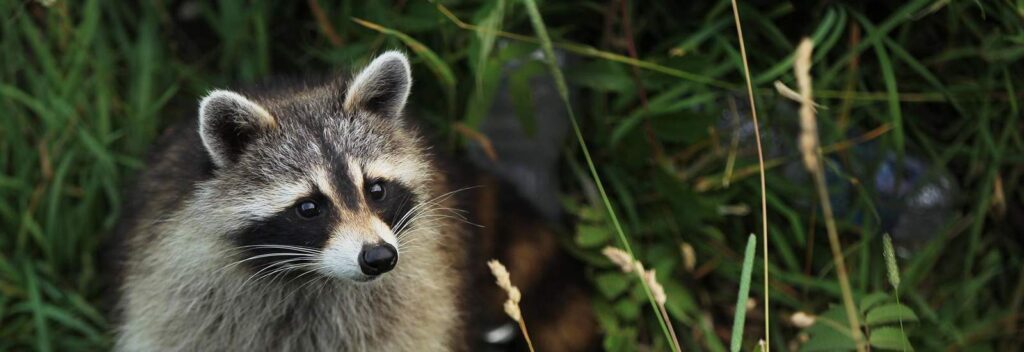
Signs of Raccoons in an Attic
Raccoons are heavier than squirrels and mice, so their movement often creates noticeable evening or night-time noise. Listen for walking, thumping, dragging, scratching or vocal sounds from young animals. If the sounds are lighter and evidence points to rodents instead, review our wildlife removal services.
- Bent or displaced roof-vent covers
- Torn soffits, fascia or roofing materials
- Compressed insulation and damaged vapour barriers
- Droppings, urine staining or strong odours
- Repeated traffic near the same roof section
Daytime sightings do not automatically mean a raccoon is sick; a mother may leave a den to find food. Keep people and pets away from any animal that appears injured, disoriented or unusually aggressive.
Where Raccoons Enter Barrie Homes
Raccoons can reach roofs by climbing trees, fences, downspouts and connected structures. Common access points are described in this guide to how pests and wildlife enter homes, including vents, soffit corners, fascia gaps, roof intersections, dormers, chimney openings and attached garages.
The visible opening may be only one vulnerability. A full roofline inspection should check surrounding vents, fasteners, shingles, flashing and previous repairs rather than patching one obvious hole.
Never Seal an Active Opening Immediately
There may still be a raccoon in there and the young raccoons may not be able to get out. Closing up too soon could trap the animal and even lead to more damage while it tries to escape.
A raccoon separated from its dependent young may rip through the patching and make a new entrance. Any permanent work must wait until the specialists have inspected the attic, determined whether there are any young, and removed the animals humanely.
Why DIY Raccoon Removal Is Unsafe
Do not attempt to approach, corner, capture, or trap the raccoon unless you have the proper knowledge. Contact may result in defensive scratching or biting. Also, roofs, ladders, and any holes in the soffit present risks of falling.
Improvise one-way doors as this may end up trapping the animals, or they will be set incorrectly. Do not use poison, fire, floods, chemicals, smoke, or a combination of different methods.
How Professional Raccoon Removal Works
The technician checks accessible interior and exterior areas, determines the species, locates the active and secondary entry points and checks for a den site and any young. The technique to be used for the removal process depends on the family of animals, time of year and the condition of the building.
When the wildlife has vacated the premises, the technician makes sure that the attic is empty. The active entry point will be sealed up and any weak points in the vents, soffits or roofline can be strengthened.
Damage Raccoons Can Cause
They could damage the roofing, compress the insulation material, damage flexible ducting, and contaminate or produce odors. Certain damages could go unnoticed, and therefore an inspection will need to be done after persistent damage by the raccoons.
Temporary fixes are usually ineffective since they don’t address the weakening of the materials nor the entry areas near such damaged areas.
Wildlife-Proofing the Roofline
Check and fix any common points of access to the home in Barrie once it is determined that the attic is not occupied. Ensure the safety of vulnerable roof vents, protect soffits and fascia, maintain roof flashings and examine roof intersections, chimneys, and structures attached to the roof.
The wildlife-resistant screening or covers should be appropriate to the part being covered and not interfere with ventilation or exhausts. Professional roofing or other building trades help may be necessary.
When to Call a Wildlife Specialist
Arrange professional help when noises continue, the opening is elevated, young may be present, roof materials are damaged, contamination is extensive or DIY exclusion has failed. See when to call pest control in Barrie for broader guidance on escalating property problems.
Simcoe PestX also offers general pest control in Barrie for residential and commercial properties. Licensed and insured technicians are available 24/7, with same-day appointments when available.
Checking for Dependent Young
The maternity den could include young that are unable to keep up with the mother through the one-way device. The wildlife technician will listen for vocalizations, nest locations, tracks and seasonal indicators before deciding on the proper course of action, which could include reuniting the family or letting the mother move her young away safely.
Do not ever attempt to touch the raccoon babies inside a den. It is possible that the mother is near and could become protective of the location. The improper separation can lead to continuous problems of noise and odor and more roof damage.
Attic Cleanup and Restoration
Assessment may have to be done on the attic after the removal to see whether there is droppings or urine or any other damage like ripped vapor barrier or affected ducts due to droppings. The cleaning process will depend on the degree and area of contamination.
Pest control, restoration, and roofing will all be separate tasks in the process. It might be that pest control contractors provide for cleanup or even exclusion services or it might involve electrical, ventilation or structural work.
Why Repellents Are Unreliable
Bright lights, radio sounds, strong smells, and chemical repellents cannot be taken as definite proof of the attic being free of raccoons because the raccoon could put up with all that commotion, retreat further into the building, or leave but come back later on.
What needs to be done is a thorough inspection, family identification, raccoon eviction, proof of evacuation, and finally, repair of the access point. Failure to observe one step will result in re-accession or occupancy.
Monitoring the Attic before Final Closure
Vacancy checking may entail examining tracks, noises, nesting materials, and activities at the entrance over an appropriate time period. The lack of sound for only one night is insufficient, particularly if the raccoon has modified its behavior or the weather has restricted movement.
The expert may employ the one-way method when the circumstances allow, but it needs to be checked and removed after the animal has exited. The secondary openings have to be covered without creating another trap inside the building.
Raccoons around Decks, Garages and Chimneys
All raccoon issues do not always start in the primary attic. The animals may take refuge under a deck, in a garage roof that is attached, uncapped chimney, crawl space or anywhere else. The assessment should cover the entire complex including any ground level dens especially when the sounds shift.
Any work on chimneys and vents needs to ensure proper air flow and function of appliances. Use properly designed caps or covers.
Frequently Asked Questions
Can I close the hole while the raccoon is outside?
No. Young may still be inside, and the adult may return. The attic must be inspected and confirmed vacant first.
Will a raccoon return after exclusion?
It may attempt to return if the den was established or young were present. Durable repairs and reinforcement reduce re-entry risk.
How long does raccoon removal take?
Timing depends on the location, season, presence of young and damage. Safe removal and vacancy confirmation should not be rushed.
How much does raccoon removal cost?
Pricing depends on inspection access, number of openings, removal method, repair work and cleanup needs. Simcoe PestX provides free estimates.
Simcoe PestX provides professional wildlife removal in Barrie for homes, rental properties and commercial buildings. Call 705-241-2172 for a free estimate or attic inspection.