
Where Are the Most Common Hidden Areas Where Pests Thrive?
The most common pest hiding places are areas that provide shelter while staying close to food, water, warmth, or entry routes. Pests generally prefer locations where people rarely clean, move objects, or disturb their surroundings. A Barrie pest control expert can help identify concealed areas when pest activity keeps returning.
Typical hiding areas inside a home include:
- Behind refrigerators, stoves, and dishwashers
- Under kitchen and bathroom sinks
- Inside cupboards and pantry corners
- Behind baseboards and trim
- Inside wall voids
- Around plumbing pipes and utility openings
- In basements and utility rooms
- In attic insulation and roof voids
- Inside closets and storage areas
- Beneath or behind rarely moved furniture
Bed bugs, however, have other tendencies. They tend to stay close to places where humans sleep or rest.
Why Do Pests Prefer Dark and Undisturbed Places?
Dark and secure places make it easier for pests to conceal themselves from humans and other dangers. This kind of place might also offer stable conditions for them to rest, nest, and travel between various areas of the house.
A little-used cabinet, wall space, basement corner, or area behind any appliance may remain untouched for some time. If food, water, or any form of shelter is present too, then the place becomes even more attractive.
Pests may also use cracks, pipes, and cable openings as their secret routes of movement. They may travel between different rooms or levels without being exposed in open areas.
This is one of the reasons why a hidden infestation of pests may take place before showing any signs of activity.
Can a Pest Problem Stay Hidden for a Long Time?
Yes. Pest activity goes undetected when insects and rodents operate from inside the walls, behind appliances, in storage areas, or in other out-of-the-way places.
Additionally, many home pests operate mostly during periods of relative silence. Mice, for instance, could be working at night, while cockroaches hideaway during the day.
Homeowners may first notice indirect signs rather than the pests themselves. These can include:
- Droppings
- Shed insect skins
- Egg cases
- Scratching or movement sounds
- Damaged food packaging
- Grease or rub marks
- Unusual odours
- Insects repeatedly appearing from the same crack or gap
An occasional sighting does not automatically mean there is a large infestation. However, repeated activity in the same area can indicate that pests are sheltering somewhere nearby.
Behind Appliances, Cabinets, and Plumbing Fixtures
Why Do Pests Hide Behind and Under Appliances?
Large appliances can create sheltered spaces that remain untouched for months or even years.
Common problem areas include:
- Refrigerators
- Stoves
- Dishwashers
- Washing machines
- Dryers
Food particles, oil, and any other waste material may settle on or under the appliances in your kitchen. Heat may also be generated by some kitchen appliances such as refrigerators by motors or compressors.
Kitchen appliances like dishwashers and laundry machines are close to water lines and drains. Moisture is created from small leaks or condensation in already safe spots.
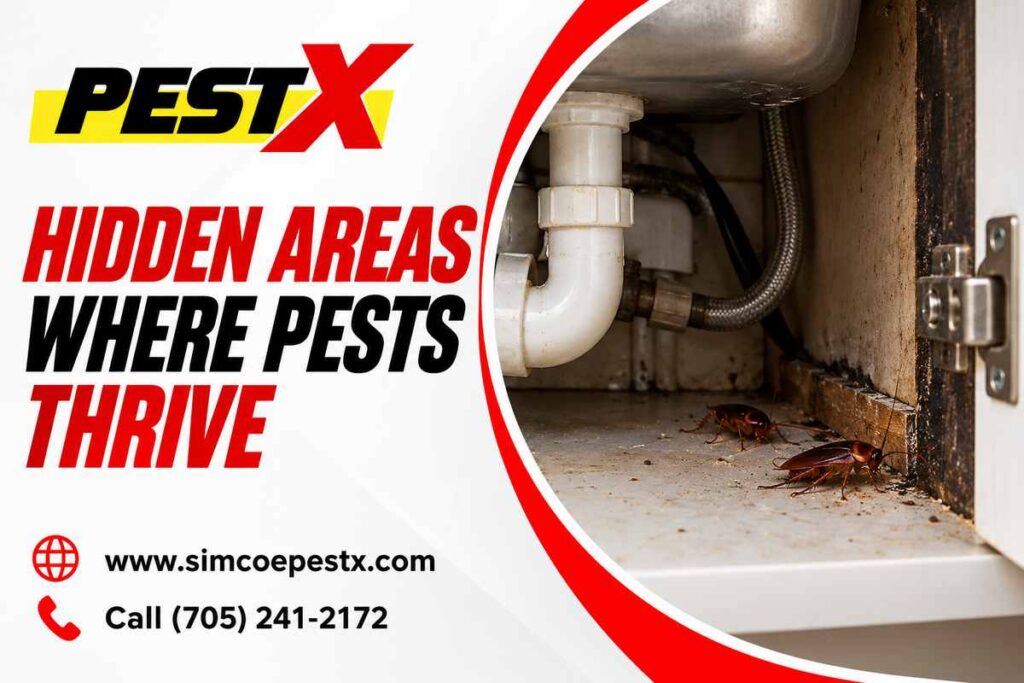
Why Are Areas Under Sinks Attractive to Pests?
Cabinets under the sink in the kitchen or bathroom could be both shelter and source of moisture.
Leaks, formation of condensation, wetness, or even standing water may attract those bugs that require humid environment. Holes for drainpipes and water lines may lead pests to wall cavities or other nearby rooms.
Homeowners should check beneath sinks for:
- Damp or stained cabinet surfaces
- Droppings
- Shed insect skins
- Insects near pipe openings
- Damaged stored products
- Unusual odours
- Gaps where pipes enter the wall
Accessible leaks should be repaired promptly. Appropriate gaps around plumbing can also be sealed when it is safe to do so.
Can Pests Hide Inside Kitchen Cabinets and Pantries?
Yes. Kitchen cabinets and pantries can contain several small, protected areas that homeowners rarely inspect closely.
Pests may hide:
- At the backs of cupboards
- In shelf corners
- Behind stored food
- Around cabinet hinges
- Beneath lower cabinets
- Behind toe kicks
- In gaps where cabinets meet walls
Inside Walls, Behind Baseboards, and Around Structural Gaps
Can Pests Live Inside Your Walls?
Yes. Mice, ants, cockroaches, spiders, and other pests may use wall cavities for shelter or travel.
Wall voids can provide:
- Darkness
- Protection from disturbance
- Warmth
- Access between rooms or floors
- Openings around pipes and wiring
Mice might enter through the gaps between the studs or around utility wires. Ants will find their way through tiny gaps in the walls, whereas cockroaches will enter via the gaps around plumbing.
The actual place of hiding may not be known by the homeowners. Rather, they will observe the pests coming out of the same baseboard, pipe opening, or crack time and again.
What Signs Suggest Pests Are Hiding Behind Walls?
Activity inside walls often produces indirect warning signs.
Look for:
- Scratching or movement sounds
- Droppings near walls or baseboards
- Insects appearing from cracks
- Repeated ant or cockroach activity in one location
- Grease marks around small openings
- Nesting material
- Unusual odours
Sounds might become more prominent during night time because of silence in the house. Repetitive sounds in a specific area can indicate that pests are following an unseen path.
It is important to note that the homeowner should not cut into the wall, take out electrical cover or anything of that sort.
The presence of pests inside a wall needs to be inspected professionally.
Why Do Plumbing and Utility Openings Become Pest Routes?
Pipes and cables often pass through walls, floors, cabinets, and ceilings. Small gaps can remain around these penetrations.
Common locations include:
- Water supply lines
- Drainpipes
- Electrical cables
- Heating lines
- Internet and communication cables
- Utility connections
How Can You Tell If Pests Are Hiding in Hard-to-Reach Areas?
What Signs Suggest Hidden Pest Activity?
Watch for:
- Droppings
- Shed insect skins
- Egg cases
- Nesting materials
- Grease or rub marks
- Scratching sounds
- Damaged food packaging
- Insects emerging from cracks
- Unusual odours
- Live or dead insects near appliances or cabinets
What Areas Should Homeowners Check Regularly?
A simple inspection can focus on accessible places that are often overlooked:
- Look under sinks and inside cabinets.
- Check beside and beneath safely accessible appliances.
- Inspect basement and utility-room edges.
- Examine closets and long-term storage.
- Look around visible plumbing and utility openings.
- Check safely accessible attic or upper storage areas.
- Monitor locations where pest signs repeatedly appear.
Avoid opening walls, electrical panels, HVAC equipment, or structural cavities.
How Can You Make Hidden Pest Areas Less Attractive?
Reducing shelter, food, and moisture can make some hidden areas less suitable for pests.
Useful steps include:
- Cleaning food residue around appliances
- Repairing accessible leaks
- Reducing unnecessary clutter
- Organizing long-term storage
- Inspecting pantry products
- Checking cabinets and closets periodically
- Monitoring basements and attics
- Inspecting accessible gaps around plumbing
- Paying attention to recurring activity from one location
When Does Hidden Activity Need a Professional Inspection?
A professional pest inspection in Barrie may be appropriate when signs repeatedly return or appear to originate from inaccessible areas.
Consider arranging an inspection when:
- Droppings continue appearing after cleaning.
- Scratching sounds come from walls or ceilings.
- Insects repeatedly emerge from the same crack.
- Pest activity returns around fixed cabinets or appliances.
- The suspected hiding place cannot be safely reached.
- You cannot determine where recurring activity is coming from.
A pest removal technician can perform the inspection of potential harbourage sites without the need for the homeowner to strip down the walls, electrical systems, and other hazardous sections of the house.
Simcoe Pest X can inspect concealed areas in which the pests might reside or travel through and provide constructive suggestions to Barrie homeowners experiencing persistent infestations.
