
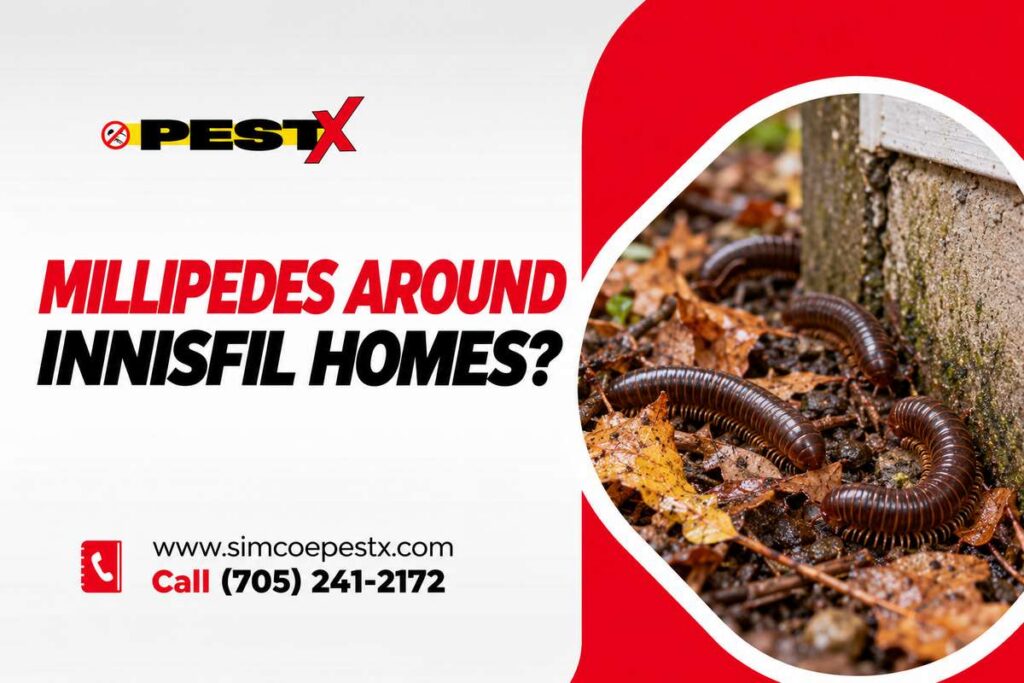
Millipedes may start becoming very visible in Innisfil homes depending on how environmental conditions shift. There may be many of them crawling on the patio, walkways, the foundation, and other surface areas within a very short time.
A large presence of millipedes may not automatically mean that there is reproduction going on in your home. More often than not, this behaviour occurs outdoors since millipedes live in the soil. An Innisfil pest control expert can help confirm the insect when activity becomes difficult to identify.
Why Millipedes Can Suddenly Appear in Large Numbers
Millipedes spend most of their time outdoors where they can eat organic materials that are decomposing. They are normally found in soil, leaf litter, garden beds, and other dark areas near the ground.
As autumn comes with its changes in temperature and outside environment, the movement of millipedes will increase. As a result, millipedes that are present inside the home become more noticeable to the homeowner despite them being rarely spotted earlier in the season.
Sometimes, several millipedes might start moving all at once. Homeowners will be able to see them cross patios, gather at the foundation or lower exterior walls.
The sudden movement will appear to be an infestation of millipedes but numbers alone will not indicate that reproduction takes place inside the home. Millipedes rely on outdoor conditions and organic matter to survive.
However, when they get into the house, they may find themselves in places where they cannot thrive. For this reason, many millipedes indoors end up dying after some time.
To those who live in Innisfil, there is one factor which is more important than any other; the nature of the activity. A short-lived increase due to fall may be very different from an ongoing one.
How to Tell a Millipede from a Centipede
Millipedes and centipedes are often mistaken for each other due to their long bodies and numerous legs. However, there are some differences between them that can be easily noticed.
The body of a millipede is usually rounded or cylindrical with many short legs under it. Moreover, most body segments of a millipede have two pairs of legs. In addition, millipedes are rather slow insects.
Many millipedes coil their bodies when they are disturbed. It is one of the easiest ways for homeowners to identify these insects.
Centipedes usually have flat bodies with long legs attached to the sides of their bodies. Centipedes have one pair of legs on each body segment. They also move much faster than millipedes.
A simple comparison can help:
- Millipede: rounded body, short legs, slow movement, may curl into a coil.
- Centipede: flatter body, longer legs, quick movement, does not normally coil tightly.
Millipedes and centipedes are often mistaken for each other due to their long bodies and numerous legs. However, there are some differences between them that can be easily noticed.
The body of a millipede is usually rounded or cylindrical with many short legs under it. Moreover, most body segments of a millipede have two pairs of legs. In addition, millipedes are rather slow insects.
Many millipedes coil their bodies when they are disturbed. It is one of the easiest ways for homeowners to identify these insects.
Centipedes usually have flat bodies with long legs attached to the sides of their bodies. Centipedes have one pair of legs on each body segment. They also move much faster than millipedes.
Are Millipedes Harmful to People, Pets, or the Home?
Although millipedes may seem frightening when there are many of them present at once, they are regarded more as nuisance pests than harmful pests.
Millipedes do not bite humans or animals. Moreover, they do not sting or attack, nor do they eat household materials. Their natural food includes decaying plant matter and organic material that they find outdoors.
However, some millipedes can secrete a substance when they are handled, squished, or disturbed. The effect of this substance varies from one type of millipede to another.
For this reason, homeowners are advised not to pick up a lot of them by hand. Using a broom or a vacuum cleaner is easier to get rid of millipedes inside the house.
Their presence within the house does not necessarily mean that they are causing any damage to the building. When millipedes enter the house, they do not like the environment and can simply dry up and die.
What really matters here is their number. Having one or two millipedes around is a lot different from having dozens of them in the house.
If their presence is higher than normal, it would make sense to figure out where their activity is concentrated.
What Innisfil Homeowners Should Do During a Millipede Surge
When only a few millipedes enter inside, they can generally be easily got rid of using a vacuum cleaner, broom, or dustpan. There is no requirement for applying pesticides to get rid of them right away.
The millipedes that have been gathered should be disposed of outdoors or quickly after using the vacuum cleaner. They should not be crushed on any surface because some of them might secrete defensive chemicals.
One must also consider the duration of the problem. Sometimes, a short invasion of millipedes in the fall season might just disappear.
Keep track of:
- How many millipedes are appearing each day
- Whether sightings are increasing or decreasing
- Which parts of the property have the heaviest activity
This will help to establish if the problem is just a temporary seasonal migration or if there is more to it.
If it turns out to be an ongoing occurrence with large numbers of activity, then it would be worthwhile considering contacting a licensed pest control expert. Identification of the pests will help to establish the reason for their presence in such large numbers.
If you are experiencing problems with millipedes in Innisfil, then Simcoe PestX can conduct an inspection of your premises and recommend the right millipede control measures.