
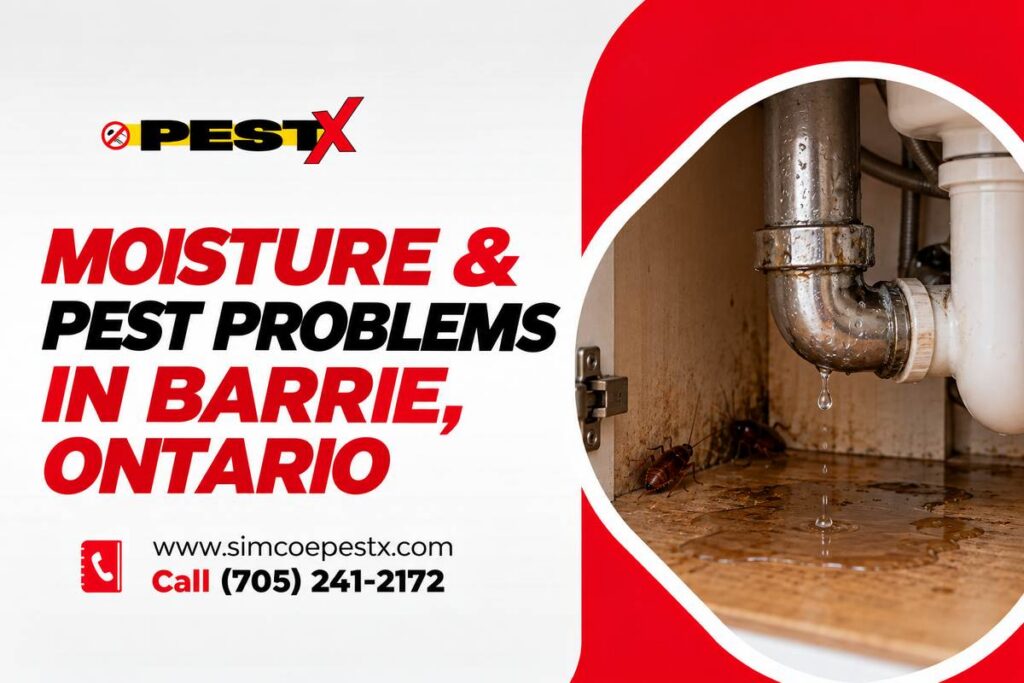
Why Moisture Can Increase Pest Activity in a Home
Why Are Many Pests Attracted to Moisture?
Many household pests need regular access to water. Some obtain enough moisture from food or their surroundings, while others are more likely to gather near dependable water sources.
Potential sources include:
- Dripping taps
- Leaking plumbing connections
- Condensation on pipes
- Damp flooring or building materials
- Water beneath sinks
- Floor drains
- Sump pump areas
- Standing water
- Persistently humid rooms
Though little water might not matter too much for a homeowner, the fact remains that pests are much smaller than humans. Little drips of water can be enough for some insects to survive.
The cockroach, for instance, is commonly seen in moist locations. The silverfish, on the other hand, prefers humid conditions. Rodents can also take advantage of any water sources present.
Presence of moisture in the house does not necessarily indicate presence of pests, but it does create an environment suitable for their activities.
How Do Damp Conditions Make Areas More Suitable for Pests?
Moisture does not only influence availability of water.
Constant moisture can provide places where pests will be able to hide and stay active undisturbed. Moisture can also make it difficult for materials to dry out, thus creating moist spots near walls, cabinets, floor, insulation and storage spaces.
These conditions may support pests by:
- Providing a dependable water source
- Maintaining higher local humidity
- Creating damp harbourage areas
- Allowing some pests to remain active in protected spaces
- Supporting small insects that may become prey for spiders and centipedes
- Contributing to damp or deteriorating materials that offer additional hiding places
Moisture under a bathroom vanity can offer water, and the enclosed vanity offers both darkness and shelter. The conditions of humidity and storage of items in a basement can offer several ideal conditions at the same time.
What is important is not just the moisture alone, but rather the overlapping of various factors such as water, shelter, access, food and harbourage.
Can High Indoor Humidity Contribute to Pest Problems?
Indeed. Continuous high levels of humidity might make some places indoors favorable to moisture-loving insects.
The temporary humidity from having a bath or washing clothes is typical. But the worry would be about the continuous presence of moisture in a particular place.
Common locations include:
- Basements
- Crawl spaces
- Bathrooms
- Laundry rooms
- Utility rooms
- Storage areas with poor airflow
The silverfish is most often found in very moist indoor conditions. The centipede can also be seen in moist conditions since such areas are capable of supporting the small insects that it feeds upon.
Common Moisture Sources That Can Support Pest Problems
Can Leaking Pipes and Plumbing Fixtures Attract Pests?
A leaking pipe does not automatically create an infestation, but it can provide pests with a reliable water source.
Common problem areas include:
- Pipes beneath kitchen and bathroom sinks
- Loose plumbing connections
- Dripping taps
- Toilet connections
- Dishwasher plumbing
- Washing-machine hoses
- Water heater connections
- Plumbing behind cabinets
Leaks that occur slowly tend to go unnoticed more easily. There could be water collecting inside a cabinet, but no wet spot will form.
How Does Condensation Create Pest-Friendly Conditions?
Condensation occurs when moisture in the air collects on a cooler surface. It can appear on windows, cold-water pipes, HVAC components, walls, or other surfaces.
Homeowners may notice moisture around:
- Basement pipes
- Windows
- Exterior walls
- Utility equipment
- Bathroom surfaces
- Laundry areas
- HVAC components
Where there is the frequent presence of insects in these areas, reducing the existing moisture level can become an effective solution.
Can Standing Water Increase Pest Activity?
Standing water can provide pests with an accessible and dependable water source.
Indoors, water may collect around:
- Floor drains
- Sump pump areas
- Utility rooms
- Leaking appliances
- Plumbing fixtures
- Basement floors
Outdoors, standing water may collect in:
- Containers
- Low areas of the yard
- Clogged drainage areas
- Gutters
- Items left outside after rainfall
The outdoor standing water may also serve as an ideal site for mosquito breeding if the water stays there for a sufficient period of time.
Where Moisture-Related Pest Problems Commonly Develop
Why Are Damp Basements and Crawl Spaces Common Pest Areas?
Basements and crawl spaces can provide favourable conditions for several moisture-associated pests.
These areas may have:
- Higher humidity
- Condensation on pipes or walls
- Floor drains
- Sump pumps
- Limited ventilation
- Damp storage materials
- Moisture entering near foundations
- Areas that remain undisturbed for long periods
These include silverfish, centipedes, earwigs, spiders, and certain kinds of ants. Centipedes usually thrive in humid environments since their food sources consist of smaller insects which need moisture to survive.
Spiders could also turn up wherever the source of their prey, insects, is plentiful.
Why Should Homeowners Check Under Sinks and Around Plumbing?
Areas beneath sinks provide several things pests may find useful: water, darkness, shelter, and limited disturbance.
A slow plumbing leak can remain unnoticed because the water collects inside a cabinet rather than on an exposed floor.
Check beneath sinks for:
- Damp cabinet surfaces
- Water stains
- Condensation on pipes
- Dripping connections
- Damaged or swollen materials
- Cockroach droppings
- Shed insect skins
- Live or dead insects
- Rodent droppings or nesting material
Homeowners can also check how plumbing openings let pests in when inspecting pipes and surrounding wall penetrations.
Where Can Kitchen Moisture Contribute to Pest Problems?
Kitchens contain several potential water sources.
Moisture may develop:
- Beneath the sink
- Around plumbing connections
- Near dishwashers
- Beneath refrigerators
- Around refrigerator water lines
- Beneath cabinets
- Near damaged seals or fixtures
Cockroaches and rodents could use available water found in the kitchen, but moisture is just one of many factors that could help their presence.
Signs Moisture May Be Contributing to a Pest
What Signs Suggest Moisture and Pest Activity May Be Connected?
Possible warning signs include:
- Insects repeatedly appearing beneath sinks
- Pest activity around plumbing connections
- Cockroaches near damp kitchen or bathroom areas
- Silverfish in humid basements or bathrooms
- Centipedes repeatedly appearing in damp lower levels
- Drain flies around drains or plumbing areas
- Pest droppings near water sources
- Shed insect skins in damp storage spaces
- Activity around sump pumps or floor drains
- Pests concentrated near condensation
- Pest activity around wet or damaged building materials
The strongest clue is often repeated activity in the same moisture-prone location.
How Can Homeowners Reduce Moisture-Related Pest Risks?
Homeowners can take practical steps to reduce the water and humidity that may support pest activity.
- Repair accessible plumbing leaks.
Even a slow drip can provide a recurring water source. - Check beneath sinks regularly.
Look for moisture, staining, damaged materials, and pest evidence. - Monitor basement humidity.
Persistent humidity may create conditions favourable to silverfish and other moisture-associated pests. - Use bathroom and laundry ventilation properly.
Ventilation helps moist air leave the room and allows surfaces to dry. - Investigate recurring condensation.
Pay attention to pipes, windows, exterior walls, and utility equipment that remain wet. - Check sump pump and floor-drain areas.
Watch for standing water, excessive dampness, and pest activity. - Remove unnecessary standing water.
Empty containers and other items that repeatedly hold rainwater outdoors. - Keep gutters and downspouts functioning properly.
Water should move away from the building rather than repeatedly collecting near the foundation. - Watch for persistently wet soil near the home.
Recurring drainage problems may contribute to damp exterior pest harbourage. - Dry wet materials promptly.
Boxes, wood, fabrics, insulation, and other materials should not remain wet unnecessarily. - Avoid long-term storage in damp conditions.
Moist storage spaces can offer both shelter and humidity. - Check moisture-prone areas for pest signs.
Look for droppings, shed skins, nesting material, live insects, and repeated pest activity.
Will Fixing a Moisture Problem Eliminate an Existing Infestation?
Not necessarily.
Correcting a leak or lowering humidity can make an area less favourable, but pests already established inside a home may remain.
An infestation may include:
- Hidden adults
- Eggs
- Nymphs or larvae
- Nests
- Harbourage inside walls
- Activity beneath appliances
- Populations in inaccessible areas
For example, repairing a leaking pipe can remove an important water source for cockroaches, but it will not automatically remove cockroaches already hiding throughout the surrounding area.
For this reason, moisture correction and pest treatment may need to occur together.
Homeowners should also continue monitoring after moisture has been reduced. Continued sightings may indicate that the existing pest population still needs attention.
When Should a Barrie Homeowner Contact a Pest-Control Professional?
Barrie Pest Control Services may be appropriate when pest activity is:
- Recurring despite moisture reduction
- Widespread throughout the home
- Concentrated inside walls or inaccessible spaces
- Associated with a suspected hidden leak
- Appearing around difficult-to-access drains or plumbing
- Continuing after obvious water sources have been corrected
- Difficult to identify
- Increasing over time
Pest Control Services can determine what pests are present, where they may be harbouring, and whether moisture appears to be contributing to the activity.