
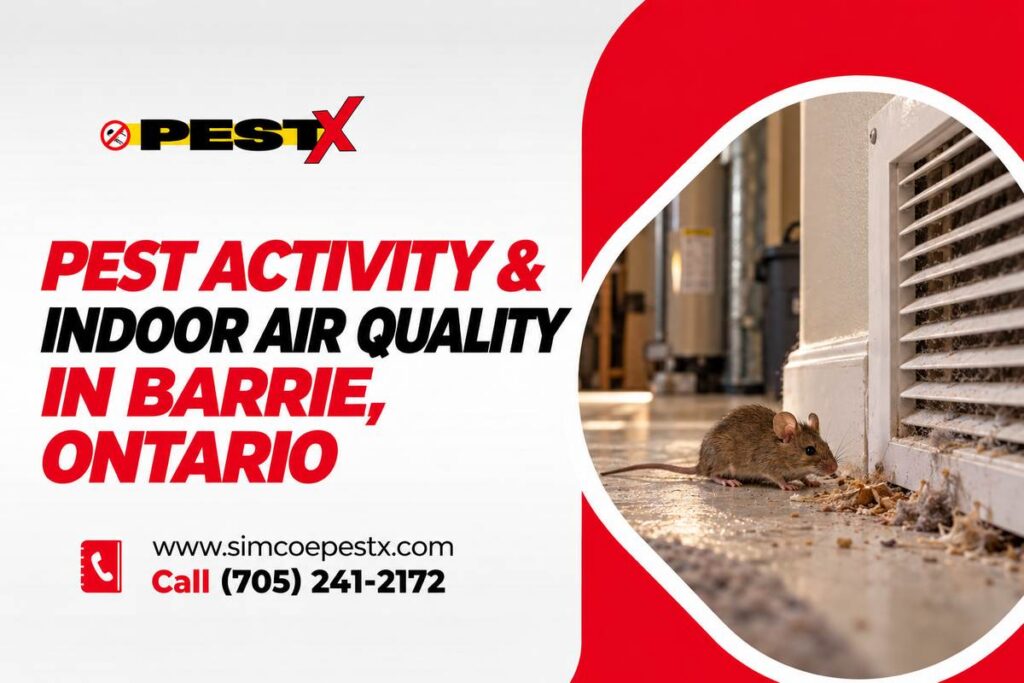
How Can Pest Activity Affect Indoor Air Quality?
Pests can leave behind waste and debris as they feed, travel, nest, and reproduce. Over time, these materials may accumulate in places that are rarely inspected or cleaned.
Common sources of pest-related indoor contamination include:
- Droppings
- Urine residue
- Shed skins
- Insect fragments
- Fur or hair
- Nesting materials
- Dead insects or rodents
- Contaminated insulation
- Pest-related odours
- Dust containing pest debris
It does not necessarily mean that the presence of these substances makes them airborne automatically. It all depends on how these materials are placed, where they are, their number, and whether they are disturbed.
For instance, debris enclosed in a walled-up cavity may be less harmful to the indoor air quality than if they were placed near a return-air opening or in a disturbed area.
Can Pests Actually Affect the Air Inside a Home?
Yes, pest activity can indeed be associated with problems related to the quality of indoor air, especially when the infestation involves generation of considerable amounts of waste materials, allergens, or debris.
Rats may have droppings, urine, hair, and other nesting materials in the premises. Cockroaches will produce their droppings, skin casts, or body parts. There can also be other insects that can generate skin casts, dead bodies, or other types of debris in hard-to-reach locations.
The small particles in such materials will get mixed up with the household dust. When disturbed while the pest moves through the area, during renovation works, storage operations, or when cleaning is improperly done, some of the particles may get airborne.
There may be pest-generated odors that will affect the indoor environment. A dead rat in the wall, the urine collected around the nest, or insect debris will cause odor, even though its source is not easily visible.
What Determines How Serious Pest-Related Air Concerns May Be?
The presence of pests alone does not show how much they are affecting indoor air quality. Several factors influence the potential impact.
Type of pest: A mouse infestation can create different contamination than a few cluster flies around a window.
Size of the infestation: Larger infestations generally produce more droppings, shed material, nesting debris, and other residue.
Duration: Pest activity that continues for weeks or months can result in greater accumulation than a brief intrusion.
Location: Waste inside an attic, wall void, basement, utility room, or near ventilation pathways may be harder to detect and remove.
Amount of contamination: A few isolated droppings are different from widespread waste or heavily contaminated insulation.
Airflow: Moving air can influence whether dust or small particles remain confined to one area or travel into other spaces.
Disturbance: Sweeping, vacuuming, moving contaminated materials, or disturbing a nest can increase the amount of dust released into the surrounding area.
For Barrie homeowners, areas such as attics, basements, attached garages, utility spaces, and unfinished storage areas are worth checking when there are signs of hidden pest activity.
What Pest Debris and Contaminants Can Affect Indoor Spaces?
Droppings and Urine Residue
Rodent droppings and urine are common forms of contamination associated with mouse and rat activity.
Droppings may collect:
- Along walls and travel routes
- Inside cabinets
- Behind appliances
- In basements
- In attics
- Inside garages
- Around stored belongings
- Near nesting areas
- Inside wall or ceiling voids
Rodent urine can also cause staining or odour problems in highly trafficked areas.
Cockroaches also make droppings that appear as tiny black spots in areas such as harbourages, cabinets, appliances, and crevices.
The waste is not necessarily going to get into the air. But the dried waste along with the contaminated dust in the area will get moved when the area is cleaned up.
It is advised for homeowners to refrain from sweeping or disturbing areas containing significant amounts of rodent waste without taking safety measures.
Shed Skins, Insect Fragments, and Pest Allergens
Many insects shed parts of their outer body as they grow or leave fragments behind after dying.
Cockroach infestations, for example, may produce:
- Shed skins
- Droppings
- Body fragments
- Egg-case debris
- Other small particles around harbourage areas
These materials can become incorporated into household dust.
Debris of cockroaches is another type of allergens found in homes. It may be an issue for some occupants who are sensitive, but its impact varies from one person to another.
Larvae of carpet beetles have skins which they shed. In houses where these insects are active, their skins may accumulate in secluded areas such as cupboards, under carpets and furniture, and in storerooms.
It is not just the presence of insect debris that causes the problem, but rather the question of whether there is enough debris and whether this debris is being redistributed.
Nesting Materials, Fur, and Contaminated Insulation
Mice and rats often build nests from materials they find nearby.
These may include:
- Paper
- Cardboard
- Fabric
- Fibreglass insulation
- Other soft materials
Besides the shredded materials, a nesting place can also comprise feces, urine stains, hair, food waste, and dead animals.
Where rodents nest within insulation materials in attics or walls, there is the possibility that the insulation will be contaminated despite removal of the rodents.
Therefore, removing the visible droppings might not be enough where the surrounding absorbent material is extensively contaminated.
Where there is extensive contamination, care needs to be taken in order to avoid causing disturbance to the contaminants.
Dead Pests and Pest-Related Odours
A persistent unexplained smell can sometimes be connected to hidden pest activity.
Possible sources include:
- A dead mouse or rat inside a wall
- Dead insects accumulating in an attic
- Rodent urine around a nesting site
- Contaminated nesting material
- Waste inside inaccessible cavities
Dead rodent could lead to bad odor formation during its decomposition. This odor could be stronger in one particular room, even though the rodent itself may be situated within walls/ceilings of the nearby premises.
Odor could show that the source of the issue is concealed. Air deodorizers or cleaning of surfaces could mask the odor, but they will not eliminate dead rodents, contamination and infestation of pests.
Consequently, dealing with the root cause of the issue is an essential step in solving the pest-related indoor air quality issues.
Which Household Pests Are Most Relevant to Indoor Air Quality?
Mice and Rats
Mice and rats can leave behind:
- Droppings
- Urine residue
- Fur
- Food debris
- Nesting materials
- Contaminated insulation
The rodents will move through and nest in places where homeowners would normally never look, such as attics, walls, basements, garages, or utility areas.
The presence of a couple of droppings does not necessarily mean that there is an indoor air problem. If there is rodent contamination for any length of time, then it is possible to accumulate more waste and debris.
Rodents may nest within insulation or other enclosed cavities in the structure.
Cockroaches
Cockroaches are particularly relevant because their droppings, shed skins, and body fragments can become part of household dust.
Cockroach allergens may accumulate around:
- Cabinets
- Appliances
- Cracks and crevices
- Wall openings
- Plumbing areas
- Other protected harbourage sites
The amount of debris generally depends on the size and duration of the infestation.
Removing visible cockroaches is only part of the solution. Established infestations may leave residue behind in areas that require appropriate cleaning after the pest activity has been controlled.
Other Insects That Can Leave Debris Indoors
Some other insects might possibly provide some small debris too.
The larvae of the carpet beetles have their skin shedding. They may pile up at the edges of carpets, underneath the furniture, in closets, or where any stored items are kept.
Cluster flies may gather in the attics, wall voids, or near the windows. Large numbers of dead flies would result in the accumulation of debris and dead insects.
Bed bugs might produce debris from their shed skins and excrement in their hiding places. But the presence of bed bugs does not necessarily mean that they affect air quality.
It all depends on the quantity and location of debris.
Wildlife Activity in Attics or Enclosed Spaces
Wildlife that gains access to an attic or other enclosed area may deposit feces, nesting material, fur, and tainted insulation in the process.
Heavy contamination can require treatment beyond simple pest and wildlife removal. Severely impacted insulation or building materials may call for evaluation from a certified cleanup or remediation professional.
The objective is to deal with the active pest threat as well as any heavy contamination that results.
Where Does Pest-Related Contamination Build Up Inside a Home?
Hidden pest activity often occurs in quiet areas where waste and nesting material can accumulate without being noticed.
These locations can also be difficult to clean safely.
Attics and Insulation
Attics can provide sheltered nesting areas for rodents and some wildlife.
Signs may include:
- Droppings
- Nesting material
- Damaged insulation
- Urine staining
- Dead pests
- Persistent odours
Waste can be embedded in the insulation material especially when the contamination persists for a long time. Contamination of the attic area does not necessarily mean that the whole home will be contaminated with the air. This can depend on several factors.
Basements, Crawl Spaces, Garages, and Utility Rooms
The basement, crawl spaces, garage attached to the house, furnace rooms, and utilities are places where things may go unnoticed for long periods.
They can give pests a safe route through which they can travel and nest.
When Barrie homeowners experience rodent infestation in their homes, it may be worth their while to check accessible storage and mechanical rooms for signs of damage to belongings, nesting material, or droppings.
Wall Voids and Ceiling Spaces
Pests inside walls or ceilings can be difficult to locate.
Possible warning signs include:
- Scratching sounds
- Repeated pest sightings
- Unexplained odours
- Droppings near wall openings
- Activity around ceilings or utility penetrations
A dead rodent inside a wall may also produce an odour without being visible.
Because these spaces are inaccessible, opening walls simply to investigate suspected pest contamination is not always appropriate. A pest inspection can help determine where activity is likely occurring.
Warning Signs and Steps for Addressing Pest-Related Indoor Air Concerns
Managing pest-related contamination starts with identifying and stopping the source. Cleaning alone will not solve the problem if pests remain active.
What Signs May Indicate Hidden Pest Contamination?
Homeowners may notice:
- Droppings in attics, basements, cabinets, or utility rooms
- Rodent nesting material
- Shed insect skins
- Cockroach debris
- Urine staining
- Damaged or disturbed insulation
- Persistent pest-related odours
- Dead insects collecting in hidden areas
- Scratching inside walls or ceilings
- Repeated pest sightings after cleaning
- Debris appearing around vents or mechanical spaces
These signs do not automatically prove that indoor air quality has been affected.
They do indicate that further inspection may be worthwhile, especially when the activity is recurring or widespread.
Address the Active Pest Problem Before Relying on Cleanup Alone
A practical response usually follows this order:
- Identify the pest and where it is active.
- Determine whether the infestation is ongoing.
- Control or remove the pest source.
- Assess the amount of waste and contaminated material left behind.
- Clean or remediate affected areas using suitable precautions.
- Correct relevant access points to reduce recurring activity.
- Monitor the area for new signs of pests.
Cleaning droppings repeatedly while rodents or insects remain active treats the evidence rather than the source. Barrie pest control services can help identify active pest sources, hidden harbourage areas, and conditions contributing to recurring activity.