
How to Pest-Proof Decks and Patios From Carpenter Bees and Wasps
Decks, patios, porches, and pergolas can provide sheltered nesting areas for carpenter bees and wasps during the warmer months.
Carpenter bees may tunnel into exposed wood, while wasps can build nests beneath railings, stairs, roof overhangs, furniture, and other protected areas.
For effective deck and patio pest proofing in Barrie, focus on:
- Checking hidden areas regularly
- Maintaining exposed wood
- Repairing damaged materials and openings
- Watching for repeated insect activity
- Addressing active nests before the problem expands
The underside of a deck deserves particular attention because joists, beams, stairs, and other framing can hide activity from normal view.
Carpenter Bees vs. Wasps
Correct identification matters because carpenter bees and wasps behave differently and require different control approaches.
Carpenter Bees
Carpenter bees are large bees that can excavate tunnels in wood for nesting.
Common signs include:
- Round holes in exposed wood
- Fresh sawdust-like debris beneath holes
- Bees repeatedly returning to the same opening
- Activity around joists, railings, fascia, or pergolas
- Old nesting holes becoming active again
Carpenter bees do not consume wood as food. They excavate it to create nesting galleries.
A single hole may cause limited damage, but repeated nesting in the same piece of wood over several seasons can result in more extensive deterioration.
Wasps
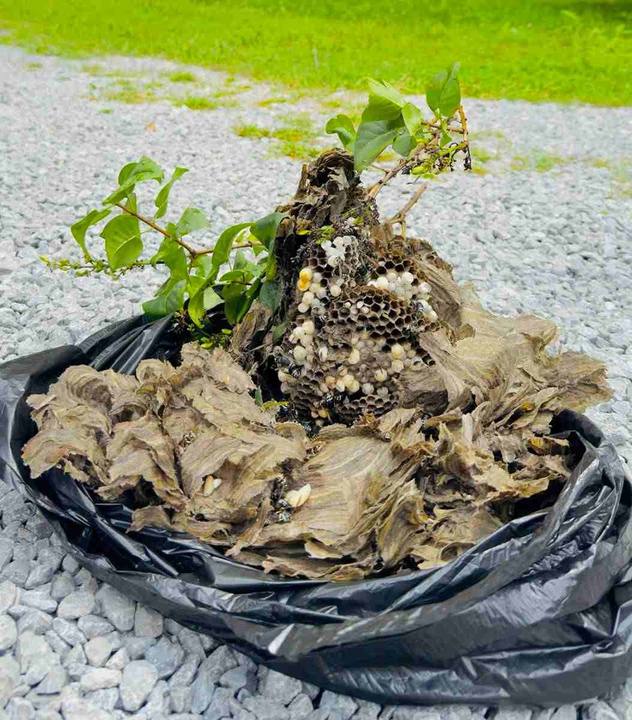
Some wasps build exposed paper nests in protected areas around decks, porches, and patios.
Common locations include:
- Under railings
- Beneath stairs
- Roof overhangs
- Porch ceilings
- Gazebos
- Patio furniture
- Sheltered deck framing
Other wasps may use concealed spaces such as wall openings, soffit gaps, or ground cavities.
If several wasps repeatedly enter and leave the same opening, there may be a nest nearby even when the nest itself cannot be seen.
Professional wasp and bee control can help identify the insect and determine an appropriate treatment approach.
Where to Check Around Your Deck or Patio
Start with areas that receive little attention during routine yard maintenance.
Under the Deck
From a safe position, visually inspect:
- Joists
- Support beams
- Stair framing
- Railings
- Deck edges
- Protected corners
Look for round carpenter-bee holes, wood debris, exposed paper nests, and insects repeatedly returning to the same location.
Avoid crawling into tight areas or placing your hands into hidden spaces when active bees or wasps are present.
Fascia, Trim and Pergolas
Exposed or weathered wood around fascia boards, trim, pergola beams, porch framing, and other outdoor structures may attract carpenter bees.
Watch for:
- Round openings
- Fresh wood debris
- Repeated bee activity
- Old holes that appear active again
Stairs and Railings
Wasps may build nests beneath handrails, landings, stairs, and other protected areas.
These locations deserve attention because they are often close to places where people walk, sit, eat, or enter the home.
Patio Furniture and Outdoor Storage
Check underneath or around:
- Tables
- Chairs
- Umbrellas
- Storage benches
- Gazebos
- Outdoor cabinets
Furniture or storage items that remain unused for long periods can provide protected nesting areas.
Exterior Openings
Watch for wasps repeatedly entering:
- Loose siding
- Open soffits
- Gaps around trim
- Damaged screens
- Utility openings
- Cracks around attached structures
Do not immediately seal an opening if wasps are actively using it. The nest may be concealed inside the structure, and blocking the visible entrance does not necessarily address the colony.
How to Pest-Proof Your Deck and Patio
1. Inspect Before Peak Summer Activity
Check decks, patios, porches, pergolas, and nearby structures before outdoor living areas become heavily used.
Look for:
- Carpenter bee holes
- Fresh wood debris
- Small paper nests
- Repeated insect traffic
- Exterior gaps
- Damaged or weathered wood
Finding activity early can make it easier to determine where insects are nesting before larger numbers become established around frequently used areas.
2. Maintain Exposed Wood
Keeping outdoor wood in good condition can make it easier to spot new damage and may make some surfaces less attractive for carpenter-bee nesting.
Depending on the material, exterior wood may be maintained with an appropriate:
- Paint
- Stain
- Sealant
- Protective exterior finish
Pay particular attention to:
- Railings
- Fascia
- Deck beams
- Pergola framing
- Porch structures
- Sheltered wood beneath overhangs
3. Do Not Immediately Plug an Active Carpenter Bee Hole
If a carpenter bee hole appears active, first determine whether bees are still using it.
Simply plugging an active opening without addressing the insect activity may not solve the problem.
After the activity has been properly managed, damaged wood can be repaired and refinished where appropriate.
4. Repair Gaps That Could Shelter Wasps
After confirming an opening is not connected to an active nest, repair vulnerable areas around:
- Siding
- Soffits
- Trim
- Screens
- Exterior fixtures
- Deck connections
- Porch framing
Repairing damaged exterior materials can reduce future opportunities for concealed nesting.
5. Reduce Food Attractants Around Patios
Outdoor food and sweet drinks can attract foraging wasps even when the nest is located elsewhere.
Reduce activity around dining and seating areas by:
- Keeping garbage containers closed
- Cleaning spills promptly
- Covering sweet drinks
- Cleaning barbecue surfaces
- Bringing pet food indoors when practical
- Removing food scraps
These steps will not eliminate an established nest, but they can reduce food-related wasp activity around frequently used areas.
Professional Pest Control in Barrie for Decks and Patios
If carpenter bees repeatedly return to the same wood or wasp activity continues around a hidden structural opening, professional pest control in Barrie can help identify where insects are nesting and determine whether treatment, repair, or additional monitoring is appropriate.
This can be particularly useful when activity occurs beneath elevated decks, inside soffits, around second-storey structures, or in other areas that are difficult to inspect safely.
Why Carpenter Bee Holes Should Be Investigated
A visible hole may represent only the entrance to a longer nesting gallery inside the wood.
Repeated activity around the same boards can also result in additional holes or reuse of existing nesting areas.
Watch for:
- Several holes close together
- Repeated sawdust-like debris
- New openings appearing over time
- Bees repeatedly returning to the same beam or railing
- Visible deterioration around older holes
If important deck, railing, or structural components appear significantly damaged, pest control and building repair may need to be addressed separately.
Why Hidden Wasp Nests Need Extra Care
Wasps entering a siding gap, soffit opening, or other structural space may be travelling to a nest that is not directly beside the entrance.
For this reason, treating or blocking only the visible opening may not address the entire problem.
A concealed nest may require professional assessment when:
- Wasps repeatedly enter the same wall opening.
- The nest cannot be seen.
- Activity is occurring near a doorway.
- The area is close to children or pets.
- Access would require a ladder.
- Heavy activity continues despite basic preventive measures.
Avoid Disturbing Active Wasp Nests
Wasps can become defensive when their nest is disturbed.
Avoid:
- Poking or knocking down an active nest
- Shaking deck or railing components around the nest
- Opening siding or soffits to search for a concealed colony
- Blocking an actively used entrance
- Climbing a ladder close to heavy wasp activity
Professional outdoor wasp control should focus on identifying the nesting area and selecting an appropriate treatment rather than simply killing individual wasps flying around the yard.
Signs You May Need Professional Pest Control
Professional assistance may be appropriate when you notice:
- Multiple carpenter bee holes
- Carpenter bees returning repeatedly
- Increasing wood damage
- A wasp nest near a doorway or seating area
- A nest beneath stairs or an elevated deck
- Wasps entering a wall or soffit opening
- Heavy wasp activity without a visible nest
- A nest that is difficult to reach safely
The presence of one bee or wasp does not necessarily mean treatment is required. Repeated nesting activity in a specific location is more important when deciding whether professional control is necessary.
Protect Your Barrie Deck Before Summer Pest Problems Grow
A routine inspection can help identify carpenter bee or wasp activity before it becomes a larger problem around your outdoor living space.
Check:
- Deck beams
- Joists
- Railings
- Stairs
- Fascia
- Pergolas
- Porch areas
- Outdoor furniture
- Soffits and siding
- Other exterior openings
Keep exposed wood maintained, repair damaged exterior materials when appropriate, and pay attention to insects repeatedly returning to the same hole, opening, or sheltered area.
If the nesting area is concealed, elevated, or difficult to reach safely, an experienced exterminator can provide the type of inspection and targeted treatment approach homeowners should look for when dealing with persistent bee or wasp activity.
For professional carpenter bee or wasp control in Barrie, call Simcoe PestX.