
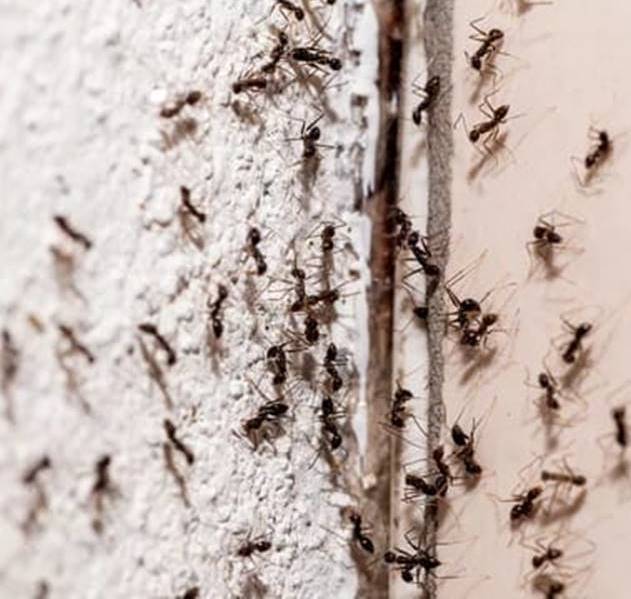
Signs of Carpenter Ant Activity
Frass is among the most obvious indicators. This dust-like substance is forced out of the nesting galleries and may accumulate beneath window sills, baseboards, beams, decks or wall penetrations.
- Large black, brown or reddish ants recurring indoors
- Winged ants occurring near windows or light sources
- Sounds of rustling or crackling from within walls or ceilings
- Ant trails near foundations, decks, rooflines or door frames
- Ant activity near water damage or damp insulation
It is important to note that carpenter ants do not feed on wood but dig it out to form smooth galleries. Obvious workers can be found a long way from the nest; therefore, ant activity in the kitchen does not mean the nest is there.
Confirm the Species before Treating
Treatment differs between carpenter ants, pavement ants, pharaoh ants and other species. Size and colour are useful clues but are not enough for a reliable identification. Photograph the ant clearly or place an intact specimen in a sealed container for professional review.
Professional ant control services are particularly important when winged ants appear indoors, activity continues after treatment or the nest seems to be inside a structural void. Avoid opening walls or removing wood simply to find the colony.
Trace Activity and Locate Likely Nests
Examine the available spaces around the windows, doors, plumbing, roof, basements, decks, utility lines, and branches that come into contact with the building. Carpenter ants tend to become active mostly at night. A repeated walk along the same edge of the wall or the use of one crack shows a routine.
The presence of fresh frass, wet wood, hollow sounding material, and the ants’ activity around a leak, or moving towards one place with food are some things to consider. One colony might have the main nest outdoors, with several satellite nests inside the building.
Correct Moisture and Damaged Wood
Moisture is one of the common causes of pest infestations involving carpenter ants. Repair leaking pipes, roof or flashing defects, condensation problems and poor ventilation. Improve attic airflow and drainage, and replace badly damaged wood where appropriate.
Pay attention to window and door frames, roof edges, deck connections, crawl spaces and plumbing areas. Moisture correction supports long-term control, but it does not eliminate ants already living inside galleries.
Reduce Entry Points and Exterior Conditions
Inspect the same areas covered in this guide to pest entry points in Barrie homes: gaps around utility lines, roof edges, soffits, windows, doors, decks and exterior trim. Trim branches away from siding, remove rotting wood near the foundation and store firewood off the ground and away from the home.
Openings around sinks and service lines also matter. Repair leaks first, then address suitable plumbing penetrations used by pests after the active nest and travel routes have been assessed. Closing an active route too early may redirect ants into another void.
Why Surface Sprays Often Fail
Surface sprays tend to affect foragers rather than the queen, the brood, and the ants in the nest. In addition, the use of repellent materials tends to modify the path, which makes it more difficult to track the colony. Do not spray all the trails and openings before an inspection.
Baits that are bought in stores will not work if there is a mistake about the species, if the baits are not put on active paths, and other sources of food are still accessible.
When to Call a Carpenter Ant Exterminator
Schedule the inspection if there is continued frass, emergence of winged ants within the premises, rustling sound from within the wall, ants reappearing despite any do-it-yourself treatment or moisture damaged wood.
The professional treatment will ensure that the species is correctly identified, mapping out the trails and assessing the possible indoor and outdoor colonies. Repair work may be needed in case the infestation is aided by leaks or structural damage.
Main Nests and Satellite Nests
The main nest of a carpenter ant colony could be located outside in a tree, stump, log, or wet structure while other satellite colonies could be found within the structure. It is possible for the satellite nests to stay alive even after treating an external colony; therefore, it is necessary to inspect the whole house together with the neighboring property.
Ants’ trails might pass along fences, wires, tree branches, foundations, or rooftops. The workers could move long distances away from the nest depending on the climate conditions and available food. It would be useful to take down the information on the time and direction of moving ants.
Assessing Wood Damage
Frass and sound wood may show galleries, but the extent of the damage cannot be determined by the ants alone. Moisture or rot, or even construction flaws prior to the arrival of the ants, may have made the area vulnerable. It is important that the damaged components are inspected by a qualified contractor or building specialist.
It is imperative not to tear down boards, insulation and wallboard without a plan. This can result in spreading the ants, damaging wiring or plumbing, and creating a challenge for future inspections. The pest control and building repairs need to be coordinated, such that the colony is treated before sealing off the gaps.
What to Expect From Treatment
These can involve the use of baits, crack and crevice treatment, or even direct treatment of the nest depending on accessibility. This would depend on the particular species involved, location of the nests, humidity levels, and the degree to which there is interaction between indoor and outdoor activities.
Visible ants may persist for some time as they come into contact with the treatments or emerge from hidden areas. If there is persistent shedding of frass, presence of winged ants, or heavy trails, this information should be conveyed. Future results will depend on correcting any sources of leaks and repairing any damage and maintenance of the exterior.
Indoor and Outdoor Prevention Checks
Check trees, stumps, fences, landscape timbers, and firewood for moisture issues and ant trails. Outdoor carpenter ants do not mean an infestation indoors necessarily, but colonies near a structure could direct workers towards roofing areas and foundation openings.
Indoors, check repairs on wet areas for moisture again or ant dust. Protect caulked and flashed areas along with ventilation, keeping all stored items away from wet walls. Seasonal activity may point out that nesting areas were overlooked.
Why Accurate Follow-Up Matters
Report where ants appear after treatment and whether they are moving, dying or carrying material. This helps distinguish normal post-treatment activity from an untreated satellite nest. Do not cover fresh frass or seal an active opening before the technician has assessed it.
Frequently Asked Questions
Does seeing large black ants confirm carpenter ants?
No. Several ant species vary in size and colour. Identification should also consider body shape, activity pattern and nesting evidence.
Can carpenter ants damage a house?
They can enlarge galleries in wood, particularly where moisture has softened the material. A building professional may be needed when structural components are affected.
Can sealing the entry point eliminate the colony?
No. Sealing may reduce access but will not treat ants already inside a nest and may redirect activity.
How much does carpenter ant control cost?
Cost depends on the nest location, property size, access, moisture damage and follow-up needs. Simcoe PestX provides free estimates.