
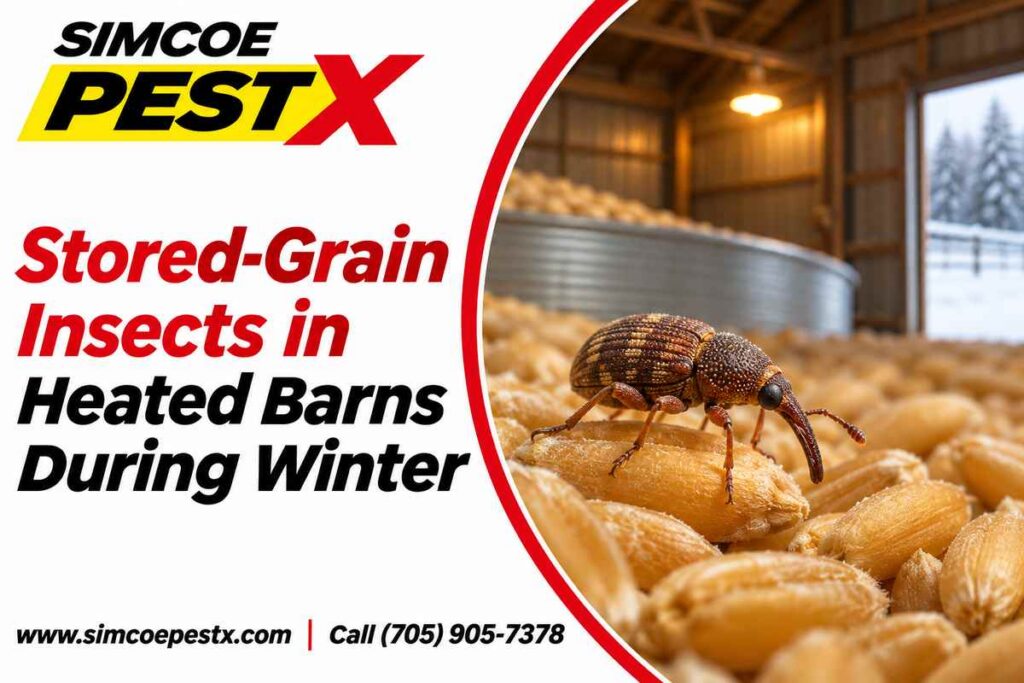
Stored-grain insects can remain active inside heated barns during Ontario winters because indoor warmth protects them from freezing outdoor temperatures. Grain beetles, weevils, and stored-product moths may survive in grain bins, feed bags, and storage equipment. Some species can also reproduce when conditions are warm enough. Grain temperature, moisture, and existing infestations all influence insect activity. Regular inspections help Bradford property owners detect problems before contamination spreads. A Bradford pest control expert can help when the insect species or source of activity remains difficult to identify.
Why Do Stored-Grain Insects Remain Active in Heated Barns During Winter?
Freezing weather does not always stop stored-grain insects from surviving inside agricultural buildings. Heated barns, enclosed feed rooms, and insulated storage areas can remain much warmer than outdoor conditions.
In Bradford and surrounding Simcoe County, winter temperatures often fall below freezing. However, insects inside protected grain storage areas may never experience those outdoor temperatures.
Indoor heating can help stored-grain insects survive, especially when grain and feed provide suitable conditions. Heating alone does not create an infestation. Insects must already be present or enter through grain deliveries, feed bags, or contaminated equipment.
Several storage conditions influence whether these pests remain active.
1. Indoor heating protects insects from extreme cold
A heated barn may provide a stable environment during winter. Insects hiding inside feed bags, stored grain, or equipment may avoid the cold conditions outside.
Even when barn doors open during deliveries, protected storage areas may retain enough warmth for certain insects to survive.
For example, a Bradford property owner may store bagged animal feed in a heated room. If the feed already contains flour beetles, those insects may remain active despite freezing weather outdoors.
2. Grain temperature can differ from barn temperature
The air inside a heated barn does not always match the temperature inside a grain bin.
Large grain piles can retain heat for extended periods. Air spaces between kernels help slow heat loss, especially in deep or poorly ventilated storage areas.
According to Ontario’s Ministry of Agriculture, Food and Agribusiness, stored grain can retain heat even when surrounding temperatures fall. Proper temperature management is important for preventing spoilage and reducing insect activity.
This means a barn can contain both cold and relatively warm storage areas.
A feed room may feel cool, while grain inside an enclosed container remains warmer. Checking the actual grain temperature provides better information than relying on indoor air temperature alone.
3. Moisture influences grain condition and insect activity
Moisture is another important factor in winter grain storage.
Water leaks, condensation, and improper storage can create damp conditions. These conditions may encourage mould growth and contribute to grain deterioration.
Some stored-product insects feed directly on grain, while others are associated with damaged grain or fungal growth.
When grain is both warm and moist, the risk of spoilage and insect problems can increase.
However, moist grain does not automatically mean insects are present. Grain can deteriorate for several reasons, including poor ventilation and moisture movement within storage bins.
Property owners should investigate unusual clumping, dampness, or musty odours rather than assuming insects caused them.
4. Stored grain and feed provide protected food sources
Grain bins, feed containers, and storage rooms provide insects with food and shelter throughout winter.
Products that may support stored-product insects include wheat, oats, barley, corn, flour-based feed, and mixed animal feed.
Some insects live between kernels. Others develop inside individual grains, making early infestations difficult to detect.
Old feed residues can also support insect populations.
For example, grain dust and broken kernels may accumulate beneath storage shelves or around feed-handling equipment. Insects can remain in these materials even after the main feed supply has been moved.
5. Infested deliveries can introduce insects during winter
Stored-grain insects do not need to enter a barn from outdoors during January or February.
They may arrive inside newly purchased feed, grain shipments, reusable containers, or agricultural equipment.
A sealed or unopened package is not necessarily free from insects. Eggs or larvae may already be inside the product before it reaches the property.
When contaminated grain is stored beside unaffected feed, insects may gradually spread into nearby storage areas.
This is why finding beetles during winter does not necessarily mean the infestation started recently.
Can Grain Beetles and Weevils Reproduce During Ontario Winters?
Yes. Some grain beetles and weevils can reproduce during Ontario winters if their storage environment remains warm enough. However, reproduction depends on the insect species, grain temperature, and surrounding conditions.
Insect survival and reproduction are not the same.
A beetle may remain alive in cool grain without actively reproducing. Other insects may continue feeding or developing when they encounter warmer conditions.
For example:
- Granary weevils can survive in stored grain, with larvae developing inside individual kernels.
- Red flour beetles may remain active in heated agricultural buildings and feed storage areas.
- Sawtoothed grain beetles can survive Canadian winters in unheated structures, although warmer conditions can support population growth.
The Canadian Grain Commission identifies temperature as a major factor in stored-product insect development. It also confirms that cold tolerance varies among species.
Low temperatures generally slow insect development. However, a brief period of freezing outdoor weather does not guarantee that every insect inside stored grain will die.
This difference matters in heated barns.
A Bradford farmer may discover active beetles inside animal feed in February, even though nearby outdoor grain storage areas show no visible activity.
The insects may have survived in the heated feed room or arrived inside contaminated material.
The key is to assess actual storage conditions, rather than assuming Ontario’s winter weather will eliminate stored-grain pests.
How Can You Identify Stored-Grain Insects in Barns and Animal Feed?
Stored-grain insects are usually identified by their appearance, feeding habits, and the materials they infest.
Common signs include small beetles, pale larvae, damaged kernels, silk webbing, and insects gathering around grain bins or feed bags.
In Bradford agricultural buildings, several stored-product insects may affect grain and animal feed during winter.
Some feed inside grain kernels, while others prefer damaged grain, processed feed, or accumulated residues.
Identifying the insect is important because different species cause different problems.
Common Stored-Grain Insects Found in Agricultural Storage
| Insect | Identification signs | Commonly affected products |
|---|---|---|
| Grain weevils | Dark brown beetles with long snouts; holes in affected kernels | Wheat, corn, barley, oats |
| Flour beetles | Small reddish-brown beetles; pale larvae in stored material | Flour, processed feed, damaged grain |
| Sawtoothed grain beetles | Narrow brown beetles with saw-like projections behind the head | Oats, cereals, damaged grain, animal feed |
| Indianmeal moths | Small moths; pale larvae, silk webbing, and clumped material | Grain products, mixed feed, dry feed ingredients |
The Canadian Grain Commission identifies grain weevils, flour beetles, and sawtoothed grain beetles among important Canadian stored-product pests.
Grain weevils
Granary weevils are especially concerning because they can infest whole grain kernels.
Adult weevils have a noticeable snout. Females deposit eggs within kernels, where the larvae develop.
This means an infestation may already exist before adults become visible.
Small emergence holes in kernels can indicate that adult weevils have developed and left the grain.
Flour beetles
Flour beetles are commonly associated with processed grain products, flour, grain residues, and animal feed.
Adults are small and reddish-brown. Their larvae are pale and may be found among stored materials.
Red flour beetles prefer damaged grain but can also feed on intact wheat kernels. Their feeding habits differ from those of granary weevils.
They may remain active inside heated storage areas during winter.
Sawtoothed grain beetles
These slender beetles have distinctive tooth-like projections along the sides of the section behind their heads.
They are commonly associated with oats, processed cereals, damaged grain, and animal feed.
Unlike granary weevils, sawtoothed grain beetles cannot feed on sound, intact kernels. They can, however, damage grain that is already slightly broken.
They may hide inside packaging folds, equipment joints, and grain residues.
Indianmeal moths
Indianmeal moths are stored-product moths whose larvae feed on suitable dry food materials.
The larvae can produce silk webbing that binds food particles together.
Property owners may notice small moths near feed storage areas or webbing within affected products.
The presence of adult moths should prompt an inspection of nearby grain and feed.
Primary and secondary stored-grain pests
Not every insect discovered in grain has the same feeding habits.
Primary grain pests cause direct grain damage. Some, including granary weevils, can develop inside sound kernels.
Other grain-feeding insects prefer broken kernels or processed products.
Secondary pests, such as certain fungus beetles, may be associated with mould and deteriorating grain rather than feeding directly on sound kernels.
This distinction helps explain why insect identification matters.
What Are the Early Signs of Insects in Stored Grain or Feed?
Early infestations are not always obvious. A grain bin or feed bag may appear normal even when insects are present.
Bradford property owners should watch for several warning signs.
1. Small insects moving through stored products
Look for beetles crawling through grain, inside feed bags, or along storage shelves.
Pay attention to repeated sightings around the same container.
2. Larvae, webbing, or cast skins
Pale larvae may appear in loose feed or near packaging seams.
Silk webbing and clumped feed can indicate stored-product moth activity.
Cast skins and insect remains may also suggest that insects have been developing nearby.
3. Damaged grain kernels
Inspect grain samples for unusual holes, broken kernels, and feeding damage.
Some insects develop inside kernels, so visible adults may not reveal the full extent of an infestation.
4. Insects around storage equipment
Check accessible bin seams, bag openings, corners, and grain-handling equipment.
Small quantities of spilled grain may conceal insects even when surrounding surfaces appear clean.
5. Changes in grain condition
Clumped grain, musty odours, moisture, and unusual heating deserve investigation.
These conditions can indicate spoilage, insect activity, or both. However, they are not proof of infestation by themselves.
How to inspect suspected grain or feed
Start with a careful visual inspection of accessible storage areas.
Examine bag openings, container surfaces, and small grain samples. A clean, light-coloured tray can make tiny insects easier to see.
Keep suspected contaminated samples separate from clean products. Avoid transferring material between containers during inspection.
For larger grain bins, appropriate sampling equipment and monitoring traps can help detect hidden activity.
The Canadian Grain Commission recommends examining grain samples and identifying insects before selecting control measures.
Never enter a grain bin or disturb stored grain where engulfment or equipment hazards may exist. Follow proper grain-bin safety procedures.
Repeated sightings, damaged kernels, or insects in multiple feed containers suggest that a closer investigation is necessary.
Identifying the species and locating the affected material are the first steps toward preventing further contamination.
How Can Bradford Property Owners Prevent Stored-Grain Insects During Winter?
Preventing stored-grain insects in heated barns requires clean storage areas, proper grain conditions, and regular monitoring. Even during winter, insects can survive in feed containers, grain residues, and protected storage equipment.
Bradford property owners can reduce infestation risks by following several practical measures.
1. Inspect Incoming Grain and Animal Feed
Stored-grain insects may arrive inside grain deliveries, packaged feed, or reused storage containers.
Before placing new products into a heated barn:
- Check feed bags for insects, tears, and damaged seams.
- Examine accessible grain samples for beetles, larvae, or damaged kernels.
- Keep newly delivered products separate from older stock until their condition is assessed.
- Avoid adding new grain to bins containing old, potentially infested material.
- Check reusable containers for grain dust and leftover feed.
For example, placing fresh feed directly into a container holding contaminated grain residues may introduce insects into the new supply.
2. Keep Grain Storage Areas Clean
Grain dust, broken kernels, and spilled animal feed can provide food for stored-product insects.
Regular sanitation reduces these food sources and makes insect activity easier to detect.
Focus on:
- Removing spilled grain from floors and accessible areas beneath storage equipment.
- Cleaning empty feed containers before refilling them.
- Vacuuming accessible cracks, corners, and storage seams.
- Clearing grain residues from handling equipment.
- Repairing damaged containers and openings that allow contamination.
- Cleaning storage areas between grain batches.
The Canadian Grain Commission recommends thorough cleaning of grain bins, aeration systems, and surrounding areas to reduce infestation risks.
Cleaning is an important preventive measure. However, it may not eliminate insects already developing inside grain kernels or inaccessible equipment.
3. Control Grain Moisture and Storage Conditions
Proper storage conditions help protect grain quality and reduce environments that support insect activity.
In heated barns, temperature differences can contribute to condensation. Warm grain may also retain heat after being placed in storage.
Property owners should:
- Repair roof leaks and other sources of water entering storage areas.
- Keep feed bags off damp floors and protect them from direct moisture.
- Follow crop-specific moisture recommendations for stored grain.
- Monitor grain temperatures using suitable equipment.
- Use aeration systems correctly where grain bins are designed for them.
- Investigate unexpected temperature increases or damp areas.
According to Ontario’s agricultural grain aeration guidance, managing temperature and moisture helps maintain grain quality and reduce storage pest problems.
4. Rotate Feed and Monitor Stored Products
Animal feed stored for extended periods may provide more opportunities for existing insects to develop.
Using older suitable feed before newer stock helps limit unnecessary storage time.
However, older feed should be checked before use. Rotation should never involve mixing suspected contaminated feed with clean products.
For winter monitoring:
- Check feed bags, storage containers, and grain surfaces regularly.
- Use suitable insect-monitoring traps where appropriate.
- Record insect sightings and changes in grain condition.
- Monitor grain temperatures in larger storage systems.
- Reinspect affected areas after cleaning or removing contaminated material.
The Canadian Grain Commission recommends checking bin-stored grain approximately every two weeks to identify developing problems early. Monitoring frequency may vary with grain conditions and storage systems.
Regular inspections are especially useful in heated barns where insect activity may continue throughout winter.
5. Handle Suspected Contaminated Grain and Feed Carefully
Finding insects in stored grain does not automatically mean the entire supply must be discarded.
The appropriate response depends on the insect species, extent of contamination, grain condition, intended use, and applicable requirements.
If contamination is suspected:
- Isolate affected containers where practical.
- Avoid transferring potentially infested products into clean storage areas.
- Keep affected animal feed away from livestock until its suitability has been assessed.
- Consult an appropriate agricultural or feed specialist about treatment, salvage, or disposal.
- Avoid using household insecticides directly on stored grain or animal feed.
Never apply pesticides to grain or livestock feed unless the product is registered in Canada and its label specifically permits that use.
Health Canada’s Pest Management Regulatory Agency requires pesticides to be used according to their approved labels. These instructions protect people, livestock, and the environment.
Unapproved treatments or improper applications may create additional contamination and safety risks.
When Should You Seek Professional Help for a Stored-Grain Infestation in Bradford?
Professional assistance may be necessary when insects continue appearing despite improvements in storage conditions and sanitation.
Consider seeking expert advice if:
- Repeated infestations: Beetles or moths return after affected materials have been removed.
- Multiple storage areas: Insects appear in several grain bins, feed containers, or storage rooms.
- Uncertain identification: You cannot determine which stored-product insect is present.
- Hidden activity: Insects appear to originate from inaccessible equipment or storage areas.
- Feed contamination: There are concerns about grain quality or whether animal feed remains suitable for livestock.
- Extensive infestation: A substantial quantity of stored grain shows signs of insect activity.
Correct insect identification helps determine whether the problem involves whole grain, processed feed, damaged material, or residues.
For significant agricultural grain infestations, a qualified grain-storage or agricultural pest management specialist can assess suitable management options.
Property owners can also contact Simcoe PestX, a local pest control company serving Bradford and surrounding Simcoe County communities, to discuss the problem and determine whether appropriate pest identification or assistance is available. Property owners can also contact Simcoe PestX to discuss suitable next steps.
Any specialised grain treatment or fumigation should be handled only by appropriately qualified professionals using methods authorised for the specific commodity and location.
