
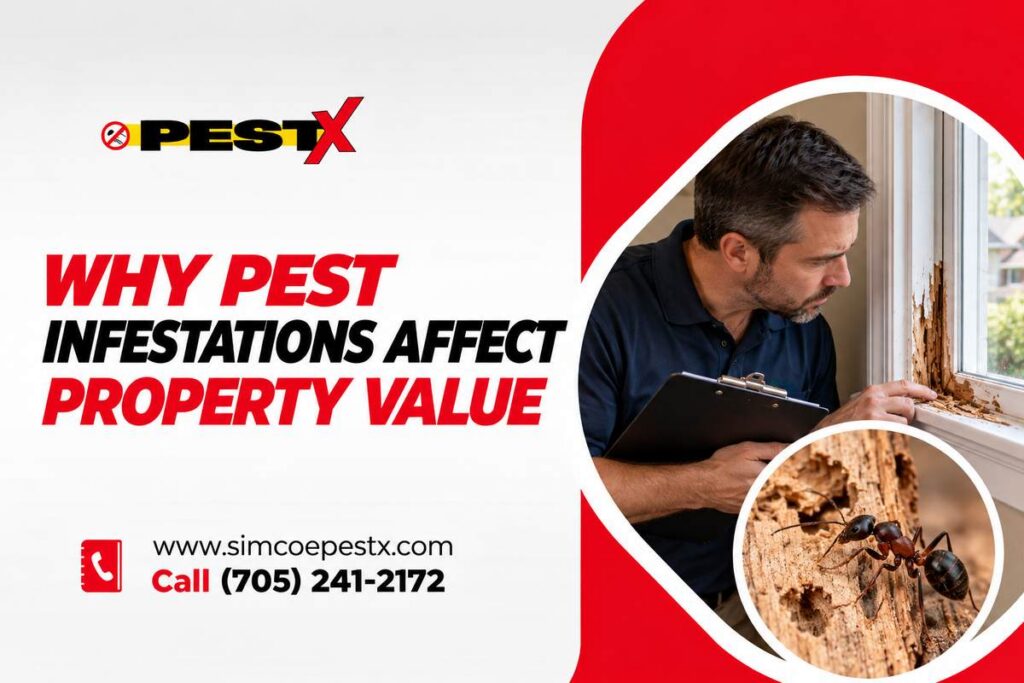
How Can Pest Infestations Affect Property Value?
Pest infestations and property valuation are related to one another primarily in terms of property condition, maintenance needs, inspection results, and buyer confidence. Just because there has been an infestation doesn’t mean that the value of the property will be reduced. There is always potential for the effect of the infestation to vary depending on the damage caused by the pests.
For instance, a few ants finding their way into the house through an entryway is much different than carpenter ants nesting in the house due to damage. It’s quite different too from a mouse problem, where there might have been more than one and they could have been in the insulation or wiring.
Pest problems may become more important to property value when they result in:
- Damage to insulation, drywall, wood, wiring, or other materials
- Droppings, urine, nesting materials, or other contamination
- Visible pest activity during a showing or inspection
- Unpleasant pest-related odours
- Open or damaged entry points around the property
- Repeated infestations after previous treatments
- Repair, cleanup, or remediation work
- Concerns about hidden pest activity inside walls, ceilings, or attics
Does Every Pest Infestation Reduce a Home’s Value?
No. The presence of pests does not automatically mean that a property will lose value.
The potential effect depends on several factors, including:
- The type of pest
- The severity of the infestation
- How long the pest activity has been present
- Whether visible or hidden damage occurred
- Whether building materials were contaminated
- The cost and extent of required repairs
- Whether the infestation is active or resolved
- Whether entry points have been corrected
- Findings made during a property inspection
- How potential buyers perceive the issue
What Types of Pest Damage Can Affect Property Condition?
What Property Damage Can Rodents Cause?
Mice and rats can create property concerns when they nest inside attics, wall cavities, basements, garages, and other protected areas.
Rodents may:
- Chew electrical wiring
- Gnaw wood, plastic, drywall, and stored materials
- Disturb or damage insulation
- Build nests inside concealed spaces
- Leave droppings and urine behind
- Contaminate attic insulation
- Damage belongings stored in garages or basements
- Create persistent odours
Homeowners may also want to consider the cost of ignoring mice and attic insulation damage when rodent activity has continued for an extended period.
How Can Wildlife Damage Attics and Rooflines?
Wildlife such as squirrels and raccoons may affect property condition when they gain access to attics or roof spaces.
Potential damage can include:
- Torn or displaced soffits
- Damaged vents or screens
- Openings around fascia or rooflines
- Disturbed insulation
- Nesting materials inside attics
- Droppings and urine contamination
- Damage around established entry points
How Pest Problems Can Affect Home Inspections and Buyer Confidence
What Pest Evidence Might Be Noticed During a Property Inspection?
Signs that may be noticed include:
- Pest droppings
- Gnaw marks
- Damaged insulation
- Nesting materials
- Staining
- Insect activity
- Damaged vents or soffits
- Visible entry points
- Pest-related odours
- Signs of previous pest repairs
- Damaged stored materials
- Evidence of recurring activity
Not every home inspector provides a specialized pest inspection. However, visible signs may lead to a recommendation for further evaluation.
Can Pest Findings Affect a Buyer’s Decision?
Yes. Pest findings can influence how buyers view the condition of a property.
Potential concerns may include:
- Whether the infestation is still active
- Whether pests have damaged building materials
- Whether hidden activity remains
- Whether contaminated materials need replacement
- Whether entry points have been repaired
- Whether the infestation has occurred more than once
- Whether additional repair costs may be necessary
A hidden structural pest damage checklist can also help identify areas that may deserve closer inspection.
Who Should Assess Pest-Related Damage?
Different professionals may be required depending on what the infestation has affected.
A pest-control professional can identify pest activity, locate likely harbourage areas, and recommend treatment or exclusion.
A home inspector can identify broader visible concerns involving the property.
An electrician should assess wiring that appears chewed or damaged.
A contractor may be needed to evaluate damaged wood, drywall, or other building materials.
A roofer may be appropriate when wildlife has damaged roofing, fascia, soffits, or roofline areas.
An insulation specialist may be needed when attic insulation has extensive contamination or physical damage.
How Homeowners Can Protect Property Condition Before Selling
What Should You Do If You Find Pest Activity Before Listing a Home?
Homeowners can follow a practical process:
- Determine whether the activity is active or historical.
Fresh droppings, new damage, noises, live pests, or repeated sightings may indicate ongoing activity. - Have recurring or hidden activity inspected.
If pests keep returning or appear to be inside walls, ceilings, or attics, professional inspection may help identify the source. - Address the active infestation.
Pest control should focus on the species involved and the location of the activity. - Identify and correct relevant entry points.
Openings around foundations, soffits, rooflines, vents, siding, and utility penetrations may need attention. Reviewing common pest entry points in Barrie homes can help identify vulnerable areas. - Assess affected materials.
Check insulation, wiring, drywall, wood, roofing components, and stored materials for damage. - Complete necessary cleanup and repairs.
Pest treatment alone does not restore damaged or contaminated materials. - Monitor previously affected areas.
Continued monitoring can help identify whether activity has returned. - Keep service and repair records.
Documentation can show what was inspected, treated, excluded, cleaned, or repaired.
How Can Barrie Homeowners Reduce Future Pest-Related Property Concerns?
Barrie homeowners can pay particular attention to areas where previous pest activity has occurred.
Useful areas to monitor include:
- Attics
- Rooflines
- Soffits
- Exterior vents
- Attached garages
- Foundation penetrations
- Basement entry points
- Gaps around exterior siding
Barrie Pest Control Services can help identify recurring pest activity, hidden harbourage, and entry points that may affect the condition of a property.
Homeowners can also review available Pest Control Services when deciding which type of inspection or treatment is appropriate for the pest involved.