
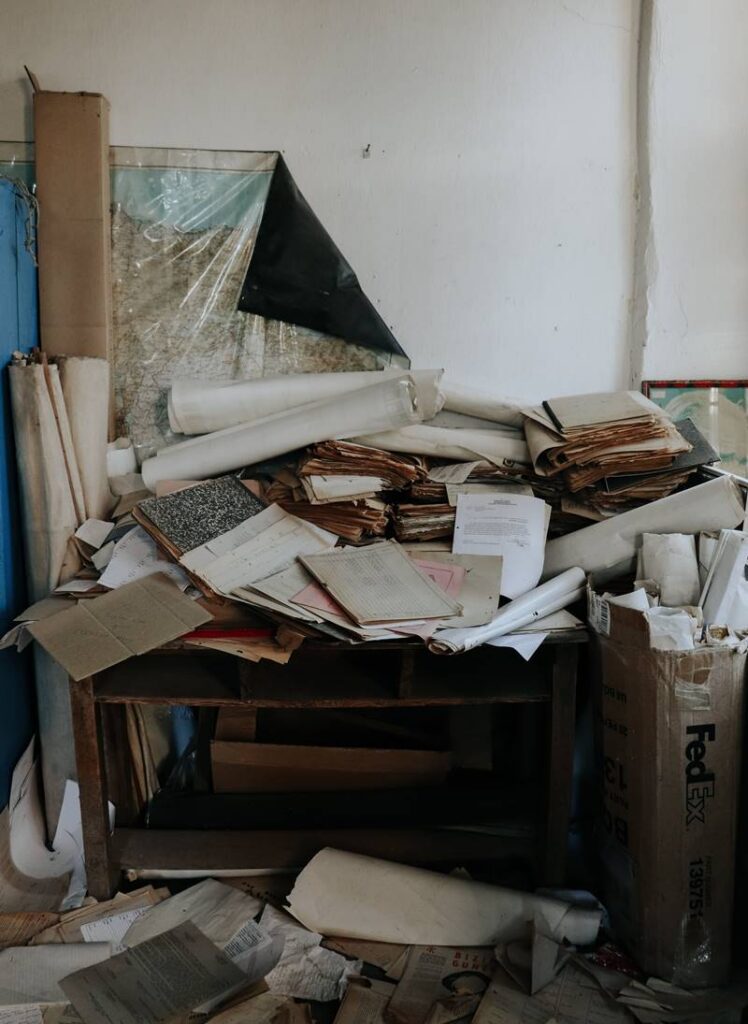
Why Does Clutter Make Pest Infestations Easier to Develop?
Pests seek out areas where they can be safe from disruption. An area that is cluttered has many nooks and crannies that can serve as hiding spots or pathways for pests.
It should be noted that not all cluttered basements, garages, and closets have a pest infestation problem. Clutter simply gives the ability to pests to operate in secrecy.
Why Are Pests Attracted to Cluttered Spaces?
Clutter can provide pest harbourage, which simply means a protected place where pests can hide, rest, nest, or reproduce.
Depending on the pest, clutter may provide:
- Dark and protected hiding places
- Areas that are rarely disturbed
- Cover from people and pets
- Materials suitable for nesting
- Concealed routes between different parts of a room
- Small gaps between boxes, furniture, bags, and other belongings
For instance, mice can use the areas behind the stored objects as safe pathways. Cockroaches can take refuge in tiny crevices between boxes and other objects. Spiders can make their webs in the silent corners that are infrequently disturbed.
It is not the possessions that create the problem. It is usually the number of safe spots created by the tight packing of the possessions.
How Does Clutter Create Protected Travel Routes for Pests?
Household pests like to travel through spaces where they are not fully visible.
Bundles of boxes, overcrowded shelves, bags that are lined against walls, and furniture encircled with stored items can form these passageways. They will be able to travel from one hiding spot to another without having to traverse any open space.
It becomes especially critical when referring to areas near walls and floor lines. Rats usually run along the walls, whereas cockroaches and some other insects prefer to stay close to any surface.
However, when these surfaces are entirely covered with any items, owners do not notice what happens behind them.
Clutter can also hide signs that pests are repeatedly using the same route. These may include:
- Droppings
- Grease or rub marks
- Gnawing
- Shed insect skins
- Webbing
- Nesting material
Keeping some space around stored belongings can make these signs easier to spot.
Why Do Rarely Disturbed Items Create Better Pest Hiding Places?
Items that remain untouched for weeks or months can provide more stable hiding places than belongings that are regularly moved.
Examples may include:
- Seasonal decorations
- Winter equipment
- Boxes of paperwork
- Spare household items
- Stored clothing
- Unused furniture
- Old bags and containers
Seasonal items in Barrie homes may be left in basements, garages, attics, closets, or storage rooms for extended time frames. Although these places might not be pest issues, keeping things in storage for long durations will help in hiding activity.
The movement and checking of the items will help uncover the things that have been hidden.
Which Types of Household Clutter Provide the Most Pest Harbourage?
Some types of clutter provide more hiding places than others. Clutter that is closely stacked, placed on the floor, or stored for extended periods of time should be considered carefully.
The purpose is not to get rid of everything stored at home. People can eliminate the problem of pests from clutter by ensuring that storage areas are easily accessible.
Can Cardboard Boxes Attract Pests?
Cardboard boxes are usually found in basements, garages, attics, and storerooms. Cardboard is easy to use, but piles of cardboard boxes left for a long period of time can become shelters for pests.
There are small openings in the layers of the corrugated cardboard, and even more space between piled up boxes.
Some insects can hide among the cardboard, while rodents can bite into it.
It is possible that cockroaches will hide in the gaps between the boxes, especially if there are many of them.
Cardboard is not an attraction for pests or a guarantee of pest infestation by itself.
Where practical, long-term household items can be stored in durable containers with secure lids.
How Do Paper Stacks, Newspapers, and Magazines Support Pest Activity?
Large piles of paper create layers and gaps that can provide shelter for small pests.
Potential problem areas include:
- Newspapers stacked on the floor
- Old magazines
- Paper files in open boxes
- Documents stored in basement corners
- Paper piled tightly against walls
Silverfish are often found to be present around paper and other cellulose materials. Other insects like cockroaches and their likes could be hiding among or below the stored material.
Another issue that could arise due to paper clutter would be that of low visibility.
The droppings, cast-off skins, insect movement, or damaged material could become difficult to spot under piles of material.
Can Stored Clothing, Linens, and Fabric Become Pest Hiding Places?
Clothing and fabric can create protected spaces when they are piled loosely or stored undisturbed for long periods.
Potential examples include:
- Bags of old clothing
- Boxes of blankets
- Spare bedding
- Fabric stored on closet floors
- Unused upholstered items
There is the possibility that carpet beetles may be related to specific materials that are stored from nature-based fibres. The rodents will also be able to use soft materials as nests if they get access to the area.
However, bed bugs need to be differentiated properly because they do not simply attract towards clutter but clutter helps in increasing their hiding spaces.
The fabrics that are being stored should stay easily accessible to inspect regularly.
Do Plastic Storage Totes Prevent Pest Problems?
Durable storage totes with secure lids can reduce access to stored belongings compared with open cardboard boxes or loose piles.
However, containers alone do not make a storage area pest-proof.
Problems can still occur when:
- Totes are damaged or left open
- Containers are packed tightly against walls
- Shelves are overcrowded
- Boxes and totes completely cover floor edges
- Large stacks remain undisturbed for extended periods
A better approach is to combine secure storage with enough space to inspect the surrounding area.
Why Are Items Stored Directly on the Floor a Concern?
Floor-level clutter can hide some of the clearest signs of pest activity.
Boxes, bags, clothing, and stored belongings placed directly on the floor may conceal:
- Mouse droppings
- Gnaw marks
- Insect skins
- Nesting material
- Webbing
- Dead insects
- Pest movement along walls
They can also block access to baseboards and corners, making inspections more difficult.
Where Does Clutter-Related Pest Activity Commonly Go Unnoticed?
Basements and Long-Term Storage Areas
Basements are often used to store household items that are not needed every day.
Common examples include:
- Cardboard boxes
- Seasonal decorations
- Spare furniture
- Clothing
- Tools
- Documents
- Plastic storage totes
- Household equipment
When the storage is too dense, issues can arise because people will not be able to see around their boxes and along walls.
Mice could run behind objects that are being stored, and insects could hide below boxes or between stacked materials. Their droppings, chew marks, cast off skin, and nests could be concealed.
In Basie, homeowners who use their basements for storage would benefit from leaving certain walls and floors clear for easy pest detection.
Garages and Seasonal Storage
Garages can accumulate belongings that remain untouched for months.
These may include:
- Winter equipment
- Sports gear
- Tools
- Seasonal decorations
- Garden supplies
- Boxes of household belongings
- Bags and containers
Crowded objects help in providing hidden spots and hinder checking.
For instance, a mouse running around the walls of the garage will go undetected when everything is packed up. Spiders can also set up webs behind the equipment which hardly moves at all.
This does not mean that there should not be anything in the garage. The point is to have things stored in such a way that you can inspect behind and beneath the objects.
Attics and Storage Rooms
Attics and dedicated storage rooms may be visited only occasionally.
This can allow signs of a home pest infestation to remain unnoticed for longer periods.
Homeowners should watch for:
- Droppings
- Gnaw marks
- Shredded materials
- Shed insect skins
- Webbing
- Damaged boxes
- Nesting materials
- Live or dead insects
Items stored for long periods should be checked periodically, particularly when they are packed tightly together.
Closets and Crowded Shelving
Closets can provide many small hiding spaces when clothing, boxes, bags, and other belongings are packed together.
Potential problem areas include:
- Bags stored on the floor
- Boxes behind hanging clothing
- Overfilled shelves
- Piles of fabric
- Shoes stored in crowded corners
- Clothing that has not been moved for months
Dense storage can make it difficult to see insects, shed skins, droppings, or damaged materials.
Keeping closet floors and shelving reasonably visible makes inspection easier without requiring homeowners to remove everything they own.
Utility Rooms and Difficult-to-Access Corners
Utility rooms may be full of cleaning products, tools, boxes, or other items stored there.
In case these items are arranged near furnaces, water heaters, washers and dryers, shelves, and pipes, they might create hard-to-inspect areas.
This clutter may prevent homeowners from having access to the junction between walls and the floor to detect pests.
Such accessibility will allow homeowners to detect signs of pest presence in time.
Which Pests Commonly Benefit From Cluttered Environments?
Different pests use clutter in different ways. Some seek protected hiding spaces, while others benefit from nesting materials or areas that remain undisturbed.
Clutter does not create these pests. However, it can provide additional harbourage and make an existing infestation harder to detect.
Mice and Rats
Rodents often look for protected places where they can hide and move without being easily seen.
Cluttered areas may provide:
- Concealed travel routes
- Protected nesting locations
- Shreddable nesting materials
- Undisturbed spaces
- Cover along walls and corners
Mice may hide behind boxes, shelving, bags, stored furniture, or other belongings.
Paper, cardboard, fabric, and similar materials may also be used for nesting.
One concern with rodents in clutter is that their signs can remain hidden. Droppings, gnaw marks, and nesting materials may not become obvious until stored items are moved.
Cockroaches
Cockroaches often prefer narrow, protected spaces where they can remain concealed.
Crowded storage can increase the number of available hiding places, especially around:
- Cardboard boxes
- Stored paper
- Shelving
- Cabinets
- Bags
- Closely stacked belongings
Dense clutter can also interfere with inspection because many potential hiding places cannot be easily seen or reached.
Reducing unnecessary harbourage makes it easier to identify where cockroach activity is occurring.
Spiders
Spiders may establish themselves in quiet areas where webs are unlikely to be disturbed.
Common locations include:
- Behind boxes
- Under shelving
- Around stored furniture
- Basement corners
- Garage storage areas
- Attics
- Closets
Clutter does not necessarily attract spiders by itself. However, undisturbed belongings can provide protected areas for web building and hunting.
Regularly checking these spaces can make spider activity easier to identify.
Silverfish and Other Insects Associated With Stored Materials
Silverfish are often associated with paper, cardboard, books, and other cellulose-containing materials.
Large amounts of stored paper or cardboard can create numerous sheltered spaces where activity may remain hidden.
Conditions can become more favourable when clutter is combined with moisture or elevated humidity.
Homeowners should therefore pay particular attention to paper-based materials stored for long periods in basements, storage rooms, or other less frequently inspected areas.
Carpet Beetles and Pests Associated With Stored Fabrics
Carpet beetle larvae may feed on certain materials containing natural fibres or animal-based products.
Items that may require occasional inspection include:
- Wool clothing
- Blankets
- Rugs
- Fabric storage
- Upholstered furniture
- Other natural-fibre materials
Problems can be easier to overlook when these materials remain packed away for long periods.
Checking stored fabrics occasionally can help homeowners identify damage, larvae, or shed skins before activity spreads unnoticed.
Can Bed Bugs Hide in Stored Belongings?
Bed bugs are not attracted to clutter in the same way rodents may use nesting material or silverfish may be associated with paper.
However, clutter can make a bed bug infestation more difficult to inspect and manage.
Additional belongings may create more:
- Cracks and gaps
- Concealed surfaces
- Difficult-to-reach areas
- Potential hiding locations
Bed bugs can also be transported in infested belongings, luggage, furniture, or clothing.
Reducing excessive clutter can improve inspection access, but decluttering alone will not eliminate an established bed bug infestation.
How Can Homeowners Reduce Clutter-Related Pest Infestation Risks?
Reducing pest harbourage does not require homeowners to remove all stored belongings.
The practical goal is to reduce dense, undisturbed hiding areas and maintain enough access to inspect walls, floors, corners, and stored materials.
What Areas Should You Declutter First to Reduce Pest Activity?
Start with spaces where pest signs are hardest to see.
Prioritize:
- Items stored directly against walls
- Dense piles on basement or garage floors
- Cardboard stored for long periods
- Boxes stacked tightly in corners
- Crowded utility areas
- Rarely opened closets
- Storage rooms that are difficult to inspect
Focus first on areas where belongings prevent you from seeing the floor or wall behind them.
The objective is visibility and access, not an empty storage space.
Replace Long-Term Cardboard Storage Where Practical
Cardboard is useful for moving and short-term storage, but large stacks can create additional hiding places.
Homeowners can reduce this problem by:
- Recycling unnecessary empty boxes
- Avoiding permanent piles of cardboard
- Using durable containers with secure lids for suitable long-term storage
- Checking boxes before bringing them into the home
- Avoiding tightly packed stacks that block walls and floors
Replacing every cardboard box is unnecessary. Focus on boxes that remain stored for months or create areas that cannot be inspected.
Keep Walls, Corners, and Floor Edges Visible
Storage does not need to be far away from every wall, but homeowners should maintain enough access to check important areas.
Look for:
- Droppings
- Gnaw marks
- Shed skins
- Egg cases
- Webbing
- Nesting materials
- Live insects
- Dead insects
These signs are easier to notice when boxes and belongings can be moved without dismantling an entire storage area.
Move and Inspect Stored Belongings Periodically
Items that remain undisturbed for long periods deserve occasional inspection.
When checking storage, look:
- Underneath containers
- Behind boxes
- Along shelves
- Around stored fabrics
- Along baseboards
- In corners
- Behind rarely moved belongings
You do not need to inspect every item constantly. Periodic checks can help reveal pest activity that would otherwise remain concealed.
Watch for Signs That Clutter May Already Be Hiding an Infestation
Certain signs deserve closer attention when they appear around stored belongings.
These can include:
- Fresh droppings
- Gnaw marks
- Shredded paper or fabric
- Nesting material
- Shed insect skins
- Cockroach egg cases
- Unusual webbing
- Persistent or unusual odours
- Repeated pest sightings
- Scratching or movement sounds near stored items
A single sign does not always confirm the size or source of an infestation. However, repeated evidence may indicate that further inspection is needed.
Avoid moving or disturbing an obvious nest or heavily infested material without appropriate guidance.
Does Removing Clutter Help Pest Control Work More Effectively?
Reducing excessive clutter can make pest inspection, monitoring, and control more effective because affected areas become easier to see and reach.
Improved access can help with:
- Identifying pest hiding places
- Locating droppings or nesting material
- Monitoring pest activity
- Inspecting wall and floor edges
- Determining where activity is concentrated
- Accessing areas that may require pest-control work
Decluttering should not be treated as a substitute for pest control when an infestation is already established. It works best alongside broader long-term pest prevention strategies.
If pest activity in a Barrie home is ongoing, widespread, hidden, or difficult to identify, a qualified pest control professional in Barrie can inspect the affected areas and determine the appropriate next steps.