
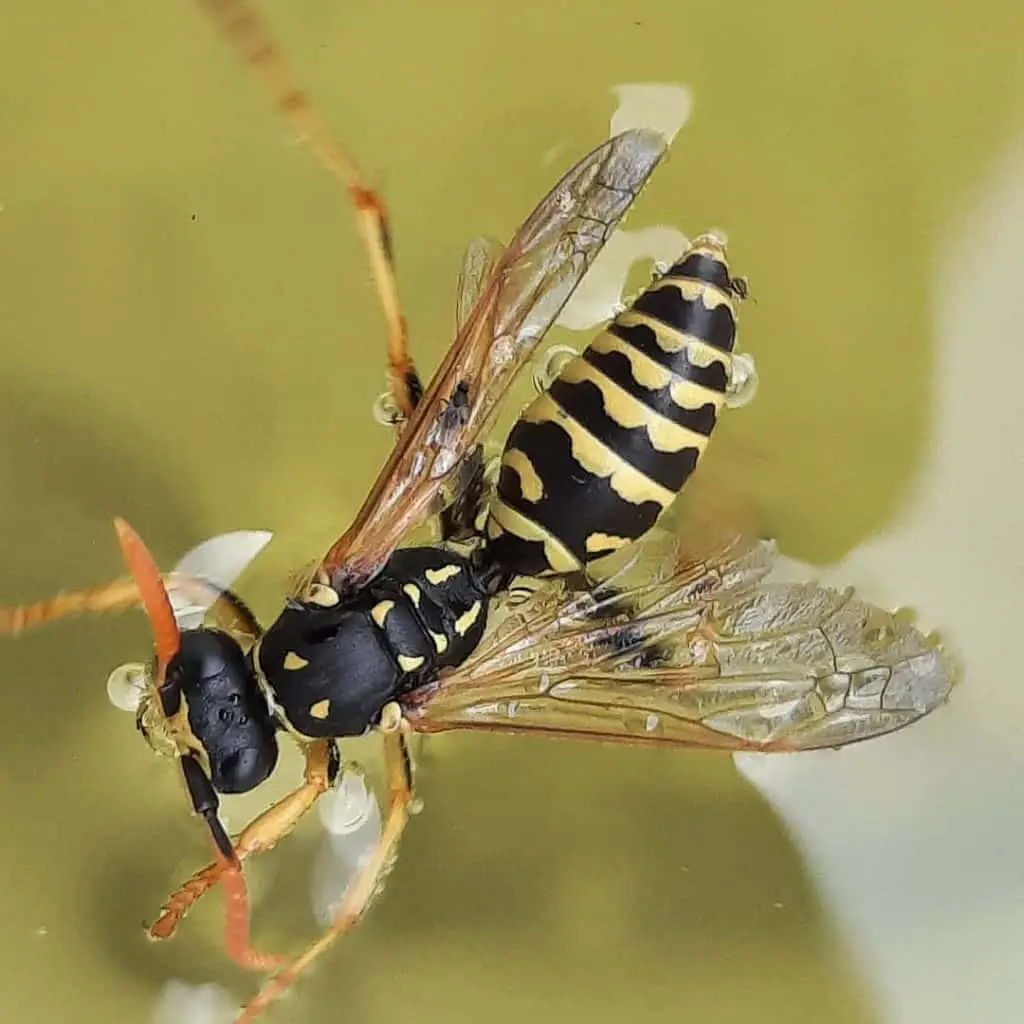
Signs of an Active Wasp Nest
Repeated two-way traffic to the same opening is the strongest sign of nearby nesting. One or two wasps visiting flowers or food may simply be foraging.
- Wasps repeatedly entering a gap in siding, soffits or roof edges
- Concentrated activity beneath decks, porches or railings
- A visible paper-like hanging or open-comb nest
- Buzzing from a wall, ceiling, shed or exterior void
- Increasing numbers near one route or structure
Do not move closer to confirm the nest, block the opening or spray it randomly. The visible hole may lead to a nest deeper inside a wall, attic or soffit.
Observe From a Safe Distance
Observe from behind a closed window or some other protected position. Concentrate on an area that multiple wasps continuously enter or leave. Don’t place yourself in their line of flight or climb ladders, and don’t strip off siding, soffits, deck planks, or branches.
Some places where nests are common include roof eaves, fascia, wall cavities, decks, sheds, shrubs, trees, fence posts, underground openings, and exterior vents. In addition to identifying wasps, it is important to identify bees and other beneficial insects.
Keep People and Pets Away
Restrict access to the area under attack. Shift outdoor activities, keep doors and windows closed, and caution the visitor, tenant, or employee. It may be necessary to postpone cutting grass, drilling, trimming, and any work that causes vibrations in the vicinity of the colony.
Those who suffer from allergies from stings should stay away from the place. Emergency medical help will be necessary in case of a severe reaction; the pest removal cannot replace medical help.
Reduce Outdoor Food Attractants
Keep garbage and compost secure, rinse recyclables, keep food outdoors covered or inside, and remove spilled foods and fruit that has fallen from trees.
While these actions may decrease the number of wasps foraging, they will not get rid of the nest itself. Continued visits by the wasps to one point indicates that the nest is still alive and well.
Do Not Seal an Active Entrance
After treatment and once activity has stopped, inspect the exterior using the same principles as these simple steps to keep pests out. Repair damaged soffits, fascia, siding, vents and trim. Never plug a hole while wasps are entering and leaving; trapped insects may search for another exit into the building.
A seasonal exterior review can identify vulnerable roof edges and wall gaps before activity becomes heavy. Use the Barrie seasonal pest-prevention checklist to keep maintenance focused and practical.
Why DIY Nest Removal Is Risky
The approach to a nest under operation increases the risk of multiple stings. High nests create a risk of ladder falls or falls, and concealed nests can be much bigger than the entrance. The spray applied from a distance may fail to hit the nest and will only increase aggression.
Never burn, flood, strike or vacuum a nest. Do not create any improvised chemicals, and never use anything that contradicts the product label. It is particularly important for nests in the walls, roof voids, trees and ground holes.
When to Call a Wasp Exterminator
Professional wasp removal is appropriate when the nest is close to an entrance, deck or play area; concealed inside a structure; elevated; located underground; or producing heavy traffic.
A technician should identify the insect, locate the active entrance, assess access and choose a treatment suited to the nest location. Hidden nests may be treated through the entry point rather than physically removed immediately.
Preventing Future Wasp Problems
Maintain garbage, recycling and outdoor eating areas, repair vulnerable exterior materials and inspect sheds, decks and roof edges. These long-term pest-prevention strategies help reduce shelter and access without relying on routine pesticide use.
Simcoe PestX provides broader pest control in Barrie for residential and commercial properties.
Hidden, Elevated and Ground Nests
Nests that can be seen are just one form of wasp issue. These nests may occur in soffits, wall voids, sheds, hollow posts, or even under ground. The point of entry for this nest can be quite a few feet away from the actual nest, making an entry into a wall or digging at the entryway make the person a lot closer to the nest than originally anticipated.
Ground nests are very easy to disturb from lawn mowing, gardening, or children playing in the area. Make sure the general location is marked and people stay out of the way. Do not pour any liquid into the hole or try to bury it with dirt.
What Happens After Treatment
There will be some movement of wasps for a while after treatment as they come back from foraging outside. Follow the advice of the technician and leave the exclusion in place. Don’t approach the opening to see if everything is going okay or to close it up until there is no more activity and the technician is ready to repair it.
If you have a nest that is visible, then it will be removed either during or after the colony has been controlled. Nest material that cannot be reached without causing unnecessary damage to the structure is left where it is.
Seasonal Wasp Behaviour
Since wasp nests are typically built during the warm period of the year, there might be little to no activity at the beginning of the season and plenty of it by the end. Wasps can become more common near sugar sources depending on the availability of other natural sources. It is important to note that just because there is no nest activity close to an entryway or living area, it doesn’t mean that it can be overlooked.
Wasps will not normally return to the same nest from the previous year, however, protected areas can attract new queens.
Wasps inside the Home
Wasps entering inside on occasion might get in from an open door, while wasps continually being found around one window or ceiling fixture may mean that there is a nest somewhere within the structure. All doors should be closed and people kept out of the way, noting where the wasps show up.
No lights or walls need to be taken off or any interior openings blocked off. The wasps may be traveling from a location in relation to the roof or wall void.
After-Season Maintenance
Once the colony is inactive, remove accessible old nest material where practical, clean food residue and complete repairs. Inspect the same area the following spring because sheltered openings may attract a new queen even though the previous colony is gone.
Frequently Asked Questions
Can I remove a small wasp nest myself?
Even a small visible nest can be active and defensive. Professional help is safer when it is elevated, hidden, close to people or difficult to approach.
Should I seal the hole after spraying?
Not until activity has stopped and the nesting area is confirmed inactive. Premature sealing can push wasps into another part of the structure.
Why are wasps attracted to my patio?
Food, sugary drinks, garbage, recycling and barbecue residue attract foraging workers. A nearby nest may also increase activity.
How much does wasp removal cost in Barrie?
Cost depends on the nest location, height, accessibility and treatment required. Simcoe PestX provides free estimates.
Simcoe PestX provides licensed and insured wasp removal in Barrie, with free estimates, 24/7 availability and same-day appointments when available. Call 705-241-2172 to arrange an inspection.